Skip to content
1/7
ILO Programme Implementation Report 2022-23

ILO Programme Implementation Report 2022-23

In 2022-23, the ILO achieved more than 1,000 decent work results in 143 Member States and territories. This report analyses the performance of the ILO in the biennium and highlights its contribution to the global promotion of social justice.
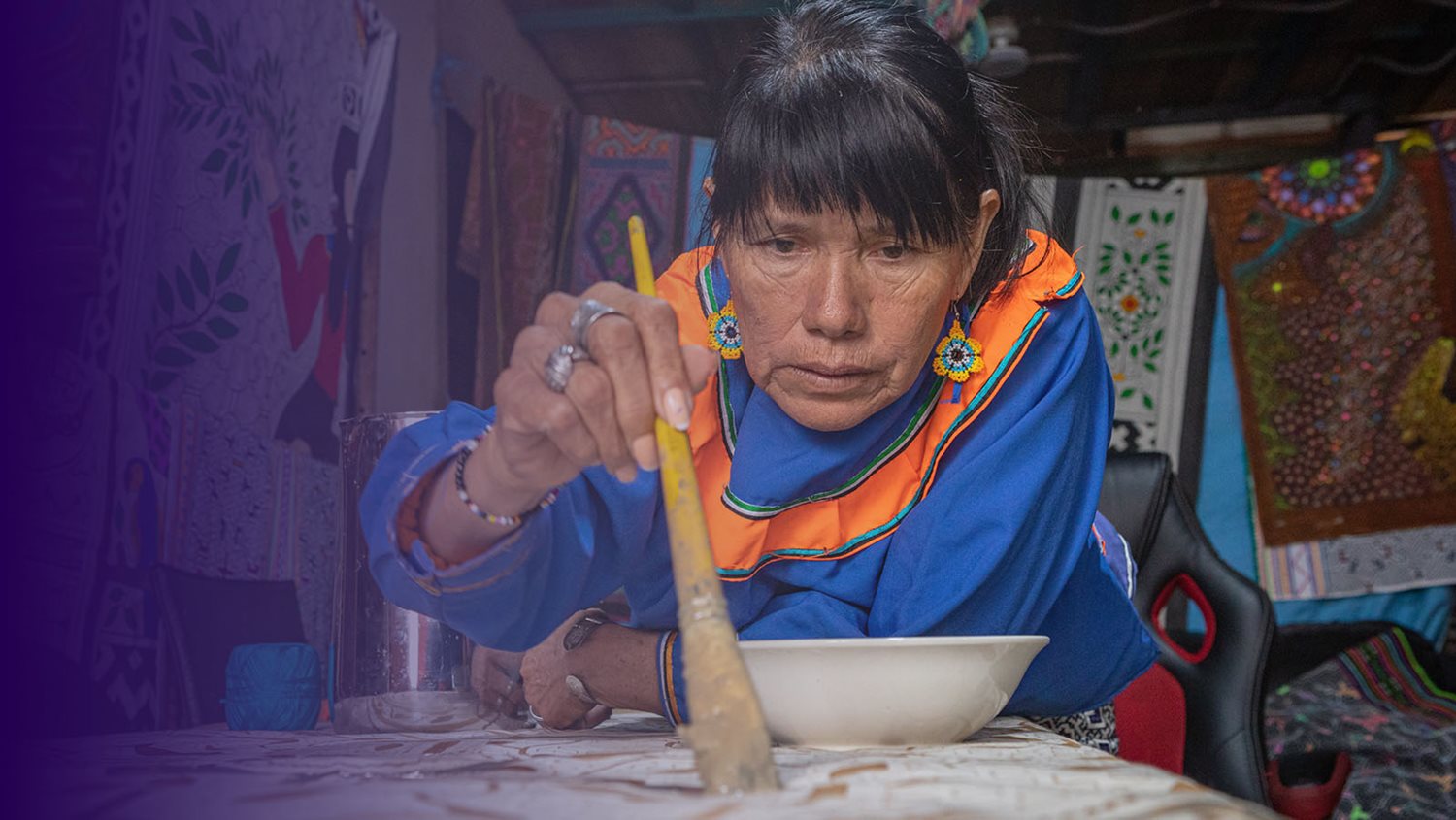
ILO Programme Implementation Report 2022-23

Advancing social justice in a world in crisis

This report – the first programme implementation report prepared under my leadership – summarizes two years of ILO performance. It highlights the actions of the Organization to support its constituents in addressing the severe realities and seizing the strategic opportunities confronting them in the biennium, both nationally and internationally.

In this context, the Governing Body’s decision in November 2023 to establish a Global Coalition for Social Justice reflects the ambition of the Organization to generate increased political commitments and investments and to foster concrete actions towards social justice and decent work, in support of national priorities.

While the challenges we face are multiple and complex, the common thread that runs through the report is simple: progress towards social justice through decent work is possible and yields tangible benefits for people and enterprises, especially those most vulnerable to decent work deficits.”


Gilbert F. Houngbo, ILO Director-General

Advancing social justice in a world in crisis

The ILO in 2022-23: Quick facts

+3,500 ILO staff

More than 3,500 people work at the ILO – 33% working at headquarters and 67% in the regions. 54% of all staff are women.

US$1.6 billion

Total expenditure of US$1.6 billion (51% from the regular budget and 49% from voluntary contributions).

1,039 decent work results

1,039 decent work results achieved in 143 Member States and territories.

Global Coalition for Social Justice

Endorsement of the launch of the Global Coalition for Social Justice, strengthening the ILO’s leading role in the 2030 Agenda for Sustainable Development and in the run-up to the 2025 World Social Summit.

New international standards

Inclusion of a safe and healthy working environment as a fundamental principle and right at work and adoption of the Quality Apprenticeship Recommendation, 2023 (No. 208).

New resolution on informal economy stats

Organization of the 21st International Conference of Labour Statisticians and adoption of a resolution concerning statistics on the informal economy.

Close to 100 ratifications

97 ratifications of Conventions and Protocols by 51 countries, including 26 ratifications of the Violence and Harassment Convention, 2019 (No. 190).

Crisis response

Increased action to promote decent work in crisis situations.

Transparency of ILO data

Major progress in transparency of ILO data, with a 100% increase in the ILO’s overall score (from 28 to 56) in publishing statistics of the International Aid Transparency Initiative (IATI), including monthly updates.

Budget and expenditure highlights

The total regular budget expenditure over the biennium was US$841.3 million, 98.7% of the budget, and extrabudgetary expenditure was US$800.7 million (of which US$24.4 million from the Regular Budget Supplementary Account (RBSA), more than 45% over the estimates.

The RBSA expenditure during the biennium, corresponding to 1.5% of the total, contributed to 10% of the country results achieved in this period, confirming the strategic relevance of this source of funds to respond to constituent demands in priority areas.

Voluntary contributions of ILO partners

About 140 ILO partners, including governments, multilateral agencies, the private sector and civil society organizations, provided voluntary funding to the ILO.

New approvals in 2022–23 reached an unprecedented US$992 million, demonstrating the solidarity of the ILO partners and their recognition of the importance of social justice and decent work to address global challenges.

Results by policy outcome

The ILO contributed to 1,039 results achieved in 142 Member States, one territory and five regional or subregional organizations across the eight policy outcomes, surpassing the biennium’s target by 8%.

Highlights per outcome

Explore key achievements and data per outcome

The keys to success

Leadership and partnerships

  • In November 2023, the ILO Governing Body decided to establish a Global Coalition for Social Justice, bringing together the ILO, UN agencies, international financial institutions, civil society, development partners, multinationals, private foundations, academia and other stakeholders, to foster concrete actions towards social justice and decent work, in support of national priorities.
  • The ILO expanded its footprint by implementing development cooperation projects in 144 countries and territories across all regions with the support of 140 funding partners from the public and private sectors.

Knowledge and communication

  • The International Conference of Labour Statisticians organized in October 2023 adopted a landmark resolution concerning statistics in the informal economy that will facilitate data collection and policymaking in this area.
  • A research repository launched in November 2023 includes more than 21,000 ILO knowledge products.
  • Audiences, followers and readers of ILO communication materials grew in most digital channels and social media platforms, such as LinkedIn (+61%), Facebook (+13%) and X (+13%).

Governance and management

  • Operations in the biennium were marked by expanded accessibility and availability of its information technology products and services, strengthened remote work capabilities, enhanced operational efficiency, and reduced administrative overheads, all while maintaining a commitment to sustainable resource utilization within the ILO.
  • New measures were introduced to ensure that the ILO is an employer of choice for diverse applicants and its own staff. The rate of P5 or higher regular budget professional positions filled by women increased to 42%, above the target set for the biennium.

More about ILO's work

Outcome 1. Strong tripartite constituents and influential and inclusive social dialogue

Highlights

  • The ILO strengthened the institutional capacity of Employer and Business Membership Organizations (EBMOs) in 59 Member States, improving governance, strategies and services of 36 organizations and enhancing advocacy capacity for another 23.
  • Support to workers’ organizations in 56 countries led to improvements in strategies and services provided by 35 trade unions and more effective advocacy and social dialogue carried out by workers in 35 Member States.
  • 38 Member States significantly improved their labour administrations, notably labour inspectorates, increasing compliance and improving the protection of labour rights.
  • 37 Member States improved regulatory frameworks for social dialogue and labour relations, reinforcing labour dispute prevention and resolution institutions.
  • In 2022, the ILO published its Social Dialogue Report 2022: Collective bargaining for an inclusive, sustainable and resilient recovery. This first flagship report on social dialogue focuses on the role of collective bargaining in promoting inclusive, sustainable and resilient recovery and highlights the need for democratic principles and rights that give employers and workers a voice in workplace governance as a prerequisite for social justice and decent work.

Read more

Employer’s and worker’s organizations establish a national forum for social dialogue in Lao People’s Democratic Republic

Outcome 2. International labour standards and authoritative and effective supervision

Highlights

  • Ninety-seven ratifications of Conventions and Protocols were registered during the biennium, 26 of which were in respect of the Violence and Harassment Convention, 2019 (No. 190).
  • Three representations of non-observance of ratified Conventions were resolved through optional voluntary conciliation at the national level.
  • One Commission of Inquiry under article 26 of the ILO Constitution completed its examination of violations of Conventions Nos 87 and 29 in Myanmar and released its report.
  • Facilitated by a significant increase in the timely reception of reports, the Committee of Experts on the Application of Conventions and Recommendations (CEACR) examined more than 3,700 comments related to the application of international labour standards, while the Committee on the Application of Standards of the International Labour Conference (CAS) and the Committee on Freedom of Association (CFA) reviewed 46 and 161 cases, respectively.
  • UN Sustainable Development Cooperation Frameworks and Decent Work Country Programmes were developed in 11 Member States to support the application of international labour standards, including by addressing comments made by ILO supervisory bodies.

Read more

International Labour Conference adds safety and health to Fundamental Principles and Rights at Work

Outcome 3. Economic, social and environmental transitions for full, productive and freely chosen employment and decent work for all

Highlights

  • Thirty-nine Member States developed comprehensive employment policy frameworks, implemented through national employment policies and youth employment and formalization strategies, which contributed to labour market recovery and addressed longer-term employment challenges.
  • Public employment services and active labour market programmes in 21 countries increased their capacity and reach to assist workers and jobseekers. In Colombia, district employment agencies were able to increase placement from 2,000 people in 2020 to around 75,000 people in 2023.
  • The ILO supported constituents in developing comprehensive just transition policies in ten Member States, encompassing jobs, skills and financing, and focusing on areas such as the blue economy, renewable energies, cacao production, sustainable tourism, the circular economy and the bioeconomy.
  • Employment-intensive investment programmes implemented in 30 countries have been instrumental in maintaining livelihoods and enhancing skills of thousands of workers, especially in rural areas and in post-crisis situations. Overall, these programmes generated more than half a million workdays, benefiting about 22,000 people, including internally displaced persons, refugees and rural workers.

Read more

How work gave me purpose after Beirut blast (Lebanon)

Outcome 4. Sustainable enterprises as generators of employment and promoters of innovation and decent work

Highlights

  • Nineteen Member States established policies, strategies and action plans that strengthened the enabling environment for sustainable enterprises in 21 policy areas, including formalization, cooperatives and the social and solidarity economy, access to inclusive and digital finance, social dialogue, the agro-pastoral sector and the blue economy.
  • An estimated 2.8 million potential and existing entrepreneurs benefited from Start and Improve Your Business training and another 1.6 million people in low-income households, small farms and micro and small enterprises were supported to access financial services, allowing them to improve their entrepreneurship capacities and their overall enterprise performance.
  • The ILO’s Sustaining Competitive and Responsible Enterprises (SCORE) Programme trained 27,021 workers and managers from 1,418 enterprises in 32 countries, of whom 42% were women. As a result, 65% of the beneficiary enterprises reported an increase in productivity.
  • More than 900,000 entities consulted the ILO Helpdesk for Business on International Labour Standards to support their efforts aligning business practices with decent work approaches.

Read more

Entrepreneur turns problems into profit (Bosnia and Herzegovina)

Outcome 5. Skills and lifelong learning to facilitate access to and transitions in the labour market

Highlights

  • The International Labour Conference adopted the landmark Quality Apprenticeship Recommendation, 2023 (No. 208), a framework to develop regulatory and promotional measures for quality apprenticeships based on social dialogue.
  • ILO-supported skills development programmes carried out in 14 Member States, which directly benefited 436,780 persons.
  • The digital platform Professional Education Online developed in Ukraine ensured continuity in the provision of technical education and training and allowed 225,000 young people to continue their studies, in spite of the war.
  • About 3,500 representatives of governments, training institutions, EBMOs and workers’ organizations from all regions increased their capacity in skills development and lifelong learning through training coursed implemented in partnership with the Turin Centre and ILO/CINTERFOR.

Read more

As a refugee, my new skills have given my family hope (Uganda)

Outcome 6. Gender equality and equal opportunities and treatment in the world of work

Highlights

  • About 1.1 billion workers and jobseekers in 26 countries were potentially impacted by legal and policy reforms on equality and non-discrimination, including maternity protection, care leave policies and services, violence and harassment and HIV/AIDS protection.
  • More than 180,000 workers in 20 countries benefited from HIV self-testing at the workplace, including migrant workers and workers in the informal economy, helping to remove stigma and discrimination and ensuring that those testing positive were able to access life-saving treatment and care.
  • New or revised legislation on equal pay for work of equal value was introduced in six countries to improve pay for women workers and to narrow gender pay gaps across sectors.
  • EBMOs and workers’ organizations in 13 countries took measures to promote equality and non-discrimination, including in relation to gender equality, diversity and inclusion and the elimination of violence and harassment.

Read more

People living with HIV getting back to business (Zambia)

Outcome 7. Adequate and effective protection at work for all

Highlights

  • In June 2022, the International Labour Conference adopted a historic resolution on the inclusion of a safe and healthy working environment in the ILO’s framework of fundamental principles and rights at work.
  • Minimum wage systems were adopted or improved in 14 countries, including higher wage floors through collective bargaining in 5 countries in Africa.
  • More than 18 million domestic workers were impacted by policy reforms and measures introduced in 28 countries.
  • More than 150,000 migrant workers benefited from assistance provided by 64 Migrant Resource Centres in Southeast Asia and more than 60,000 migrants and refugees in Latin America received services provided by workers’ and employers’ organizations.
  • Two thousand children in the Arab States involved in the worst forms of child labour have been withdrawn and rehabilitated, and over 8,000 vulnerable children and families benefited from improvements in policy frameworks.

Read more

Domestic workers need social protection too (Thailand)

Outcome 8. Comprehensive and sustainable social protection for all

Highlights

  • The ILO contributed to the development of comprehensive, adequate and sustainable social protection systems and floors in 32 Member States.
  • Social protection reforms supported by the ILO in 2022 and 2023 focusing on health and occupational injury insurance extended legal coverage to an estimated 77 million people.
  • To support efforts to recover from the catastrophic effects of the COVID-19 pandemic, the ILO contributed to the development of policy measures to extend health and sickness coverage in 23 countries and to provide income security through unemployment protection in seven Member States.
  • In partnership with the IMF, the ILO implemented a pilot project on social protection financing in Iraq, Mozambique, Togo and Uzbekistan. In this framework, a joint costing study for Mozambique supported the negotiation of a new line of credit with the IMF and enabled the Government to identify additional financing to extend coverage of non-contributory pensions to nearly 400,000 older persons.
  • ILO research indicates that, for every US dollar invested in social protection, national economic output increases by between US$2 to US$5.

Read more

Rights migrate too (Colombia)

We use cookies to give you the best experience. By using our website, you consent to the use of cookies. Find out more in our privacy policy.