


Trends and new developments in employment services to support transitions in Sub-Saharan Africa, the Middle East and North Africa Regions
Abstract
This paper presents the findings of a survey undertaken in selected countries in the Sub Saharan Africa and Middle East and North Africa regions (SSA and MENA) aimed at reviewing the status of employment service provision, challenges and opportunities for their development to buttress governments’ efforts to tackle employment challenges, particularly for the youth. Given the enormous employment challenges in these regions relating to the quality (SSA) and quantity (MENA) of employment, particularly for vulnerable groups, the study confirms the potential role employment services can play in the region, including improving the quality of employment in the formal economy as well as promoting the formalization of the informal jobs and enterprises.
While public employment services are at different levels in different countries, they share the weakness in capacity. In order to address these challenges, governments need to invest in resourcing the PES and setting up a clear and conducive legal and policy framework. The institutional framework for PES seem to play a critical role – PES organized as executive agencies tended to be stronger, more effective and efficient than those that were part of the Ministries of Labour with some exceptions. The paper recommends that PES adopt digital technology in service delivery with a balanced offer of physical services to ensure inclusion, explore the use of partnerships with other public organizations, private employment agencies and third sector service providers, and focus on employer services where labour demand is low while adopting a more realistic phased approach to service development. The study was undertaken as part of the ILO cooperation with YouMatch – global initiative on innovative employment services for youth, implemented by the German Gesellschaft für Internationale Zusammenarbeit (GIZ) gmbH on behalf of the Federal Ministry for Economic Cooperation and Development (BMZ).
Executive Summary
This paper discusses the status of public employment services in SSA and MENA regions based on a survey administered in 18 countries covering PES and non-PES providers of employment services supported by an extensive literature review.1 The delivery context these organizations operate in can be characterized by a number of common factors. In all countries, Labour Market Information (LMI) is limited, contributing to a lack of transparency concerning demand and supply. Labour market function in all countries could be said to be inefficient, with high levels of irregular and informal employment. High levels of persistent unemployment, poor working conditions, limited/noncompliance with health and safety regulations, limited/absent employment protection, and low paid work involving long hours, large populations of NEET2 youth are common features. There is a very high dependency on informal recruitment networks that can enhance discrimination in hiring practices.
The PES operated in two groups of institutional settings. Public agencies or bodies legally established and responsible to a parent Ministry (usually employment/labour ministries) described as “Agency PES”, and PES which are “line departments” of the responsible Ministry but with no independent agency status, described as “Ministry PES”. One PES has a hybrid structure with youth services delivered by a legally separate agency, and other PES operations delivered by the Employment Ministry.
Some of the non-PES organizations described in this report provide certain PES services under partnership arrangements including commercial contracts with Ministries, both as complementary and competing actors.
The Agency PES tended to describe a more focused remit on delivery of services to jobseeker and employer customers. They generally had PES- specific performance delivery objectives and targets, and, in most cases, some input into staff recruitment policy and job design. These organizations generally produced specific plans describing their management approach to delivering their mandate and priorities, these documents provided the framework for their service models. PES which are a constituent part of parent Ministries, in most cases, lacked their own coherent elaborated strategies and plans. They did not have separate operational objectives from their overseeing Ministries and had a low priority compared to other areas of employment policy administration reflected in very limited resources. Namibia provided an exception to this trend where legislation has formalized the PES mandate with its remit highlighted in the National Employment Policy, and a dedicated department within the Labour Ministry both reflecting and promoting the political priority afforded to PES.
All PES described (at least in theory) a core service, this included job search support and delivery of at least some form of Active Labour Market Programs (ALMPs), typically guidance. A number reported delivering careers advice, though clear evidence of careers, as opposed to general job search counselling was less prevalent and “classic” careers counselling was only described in a couple of countries. Only one PES, Zambia, was not currently handling any vacancies registered by employers, however, this was due to extreme capacity constraints rather than a policy decision not to offer what is accepted as a core PES activity. All respondents reported disaggregation of targets from central to local management/delivery tiers, though in most cases of Ministry PES (Namibia being an exception) the performance objectives quoted were Ministry level national employment policy objectives and not PES operational targets. Agency PES, however, all reported specific PES service delivery objectives.
All respondents reported at least some contact with employers, though the extent of this varied. Agency PES, with one exception, Benin, reported dedicated Employer Support Units in their organizations. Benin, the Agency PES not operating this model, explained that this was due to a preference to integrate employer engagement with jobseeker services, which was viewed as more productive; this was not an indication or reflection of diminished priority. In contrast, Ministry PES tended to have less developed employer engagement operations, and only one reported a “PES” specific Employer Engagement Strategy. This is reflected in the level of services offered to employers, with the Agency PES generally offering intermediation services beyond vacancy handling and referring clients. This involved more comprehensive support including arranging/delivering specific employability/skills training, support with recruitment exercises and internships, etc.
Though, most PES reported some client group differentiation of services, including describing profiling and segmentation, this was in most cases fairly residual in practice, involving some categorization and information gathering to assist in referring clients to particular programs, with little evidence of discrete client group specific service lines. However, in a couple of cases, PES are employing more sophisticated techniques to identify and analyze client characteristics to support more systemized integration approaches.
Ministry PES have very little scope to feed into resource planning decisions, and even less to influence these. Agency PES structures, however, tend to provide models and systems with the potential to enable the allocation of budgets to better reflect operational considerations and requirements. However, the de facto impact of these arrangements tends to be limited by the relative status and political influence of PES, even if legally independent compared to central Government Ministries. Cameroon PES, a single example mostly funded by a levy on employers, displays more significant evidence of genuine control over its funding.
Partnership working, under both informal/formal arrangements, service level agreements, and some commercial contracts, is an important feature of delivery of employment services in all countries participating in the study. PES is involved in “hand-offs” to specialized service providers for certain client groups (e.g. youth, disabled people) and in some cases cooperate with Private Employment Agencies and Temporary Work Agencies (PrEAs/TWAs). The extent of cooperation and collaboration varies. In some cases non-PES actors provide services either parallel to or duplicating PES or, in other instances, support in the absence of any PES provision. As such, the extent of service coordination varies considerably. A number of PES are responsible for PrES regulation, though there is no information available as to the outcomes from these relationships. The returns from non-PES organizations involved in the study reflect various approaches to cooperation with PES and illustrate a variety of differently constituted bodies. These form part of the overall employment support system in countries where no PES could be described as delivering a comprehensive service.
Staffing levels and the extent of IT support reflect a significant variation in service provision between PES. A number of promising developments are covered in the main body of this report, with clear examples offering scope for greater sharing of knowledge and expertise between countries and organizations. Notwithstanding this, the PES participating reported a number of fundamental challenges. Chief amongst these are a lower priority given their services compared to other areas of public policy, limited resources, insufficient vacancies to offer clients, staff retention, a need for more strategic coordination, and the logistics of delivering services to dispersed rural populations. All of these issues need to be considered in the context of how labour markets operate in countries with high levels of informal employment.
Introduction
Public employment services in SSA and MENA region are still in their nascent stages, exhibiting wide variability across countries, yet sharing some common characteristics. As part of ILO efforts to support member states capacities to design and implement comprehensive employment policy frameworks to promote quality and quantity of employment, the study examines the role of public employment services in the implementation of employment policies as well as in influencing their design. It does so by analyzing the policy and legal frameworks, their institutional and organizational set up and how these affect service provision, delivery as well as their effectiveness.
Providing good practices and new developments in employment services in the Sub Saharan Africa and the Middle East and North Africa Regions, this working paper is a product of the collaboration between the ILO and YouMatch GIZ project.
The information is derived from a survey (see Annex 5) sent to 15 Public Employment Services (PES) and 8 Non-PES Organizations that deliver part of employment services. The completed questionnaire is the primary source of data. This has been supplemented by other sources from the available literature.
It is important to note that the data was gathered from analysis of the aforementioned self-completed returns from Youmatch project participants. Though the questionnaire consisted of a set of standard questions, some respondents provided very useful extra information, others provided material returned under different subject headings from the questions requesting specific information. The extent of questionnaire completion and level of detail in responses also varied considerably. Notwithstanding efforts to avoid ambiguity, there were also some variations in the way respondents interpreted certain questions. Caveats have been applied in the paper to clarify responses to questions, which remain open to different interpretations. These primarily relate to definitions of functions e.g. vocational training for which there is no single standard definition. The development of more standardized descriptions can assist in future study and support the use of typologies to support comparative analysis. In this regard, some of the queries remaining at the time of publication, and a number of the specific more detailed responses have provided subjects for possible further study.
Many of the organizations that contributed to the study have very limited resources and sparse capacity. In most countries participating, delivery of PES services is an internal function of a Government Ministry. In some of these cases, there is very little organizational capacity, and a limited and sometimes only a most residual delivery infrastructure. In some of these examples, there may be no clear definition and internal organizational boundary between units delivering what might be described as a discrete PES operation and other Ministry functions. Where specific services have been reported as being delivered by the Ministry as distinct from (internal) “PES Units”, this has been recorded. However, the overall descriptions of delivery functions should therefore be understood in the context of employment services provided by the state authorities irrespective of internal bureaucratic structures.
Background – The role of Employment Services in Emerging Countries
Employment services are an essential component of efficient labour markets with a number of functions including matching jobseekers to job opportunities.
The OECD (OECD, 1997) identifies three core functions of Employment Services: payment of benefits, job intermediation and referral to ALMPs. The ILO has had a mandate to work on employment issues from its inception. This has been reaffirmed with the Global Employment Agenda (2003), the Declaration on Social Justice and Fair Globalization (2008) and the Global Jobs Pact (2009). The ILO also notes in Conventions 88 and 181 the crucial role of PES in providing a mechanism for the collection of Labour Market Information (LMI). The ILO Convention on Employment 1919 (No.2) both acknowledged the role of and promoted the establishment of national Employment Services.3 The role of PES was fully articulated internationally with the adoption of Employment Service Convention 1948 (No.88). Frey and MacNaughton (2016) noted the key role of the ILO Decent Work Agenda adopted in 1999 as a soft law instrument proposing to focus ILO policies around four strategic objectives or pillars: (a) rights at work, (b) fostering employment, (c) social protection, and (d) social dialogue.
Historically, PES operated as state monopolies, normally organized through Ministries of Labour. However, there has been a gradual recognition of the role of PrES through conventions 34 and 96. An especially significant call occurred following the Private Employment Agencies Convention in 1997 (ILO Convention No. 181) and the accompanying Recommendation (No. 188). These recognized potential benefits including cooperation between PES and PrEAs. PrEAs can complement PES with alternative options for job matching and provision of employment focused training to meet employer requirements. Thuy et al. (2001) noted the increasing growth of PrEAs with deregulation following the Convention, which essentially formerly recognized an existing trend.
Employment Services have two key sets of customers, employers and jobseekers, and most are steered by advisory bodies emphasizing social dialogue principles involving dialogue between government, employers and workers.
In advanced countries, job intermediation increasingly involves a combination of public and private services, delivered through a blend of online, self-service, and traditional face-to-face channels. Struyven (2014) has noted a trend of institutional splits between government commissioning bodies and service providers, which could be either public or private organizations. This reflects New Public Management theory with supplier/customer divisions and delivery mechanisms reaching beyond what were previously internal government functions (see Hood, 1991; Walch, 1995; Clark and Newman, 1997).
The context for the operation of employment services is very different in developing countries to that of those operating in advanced economies. The increasing transparency on both the demand and supply sides of the labour market, driven by technological change, noted by Leroy and Struyven (2014), is less established in most developing countries. Mazza (2017) attributed this lack of transparency to poorly functioning markets with employers rarely advertising vacancies and poor-quality information, combined with inefficient, slow and frequently unfair hiring practices. She described nepotism (and sometimes politicized hiring) amongst elites and educated people without influence waiting for what can be poor-quality public-sector jobs. However, public sector employment can also be a better option than private sector jobs in many cases. Ineffective matching also acts as a drag on productivity with very slow transitions. These can prevent companies recruiting personnel with the required skills and competencies that will enable them to capitalise on growth opportunities.
People using a mix of formal and informal networks to find or change jobs is an accepted, and generally acknowledged as a positive feature of labour markets in developed countries. In developing countries, informal job search networks predominate and in many countries, data is very limited if not non-existent. Diego F. Angel-Urdinola (2010) in an ILO survey of recruitment in MENA countries found “Friends” to be the overwhelming response to questions about how people found a job.
A crucial problem of a reliance on informal networks is the danger that they will serve to reinforce and even institutionalize existing disadvantage. Research of recruitment in Venezuela by Marquez and Ruiz-Tagle (2004) found workers in the informal sector more likely to use informal job seeking networks and having a greater propensity to be locked into low-paid informal precarious work. Garcia and Nicodermo (2013), in a study of Colombia, identified negative geographical dimensions to a dependence on informal employment networks with people in poorer neighbourhoods locked into a cycle of poor-quality jobs. Contreras et al. (2007), studying employment patterns amongst indigenous people in Bolivia, found especially serious gender imbalance issues from informal job search networks. Women with greater domestic responsibilities experienced great difficulties gaining any exposure to the type of formal recruitment networks which might provide them access to more secure salaried employment.
Many African PES have experienced significant reductions in resources since the advent of Structural Adjustment Programs in the 1980s. In a 1998 ILO Report, Schultz and Klemmer described a “vicious circle” with PES services to be in perpetual low capacity, ineffectiveness and poor reputation with jobseekers and employers. PES, which were a constituent part of Ministries rather than a separate legal entities, struggled to secure resources often being treated as a low priority. This has resulted in gaps in provision and many countries only able to deliver residual or marginal PES services. The African Development Fund observed notable challenges for jobseekers in developing countries. They particularly stressed persistent high levels of unemployment, poor working conditions, wage gaps and discrimination. Consequently, finding employment did not guarantee decent living conditions in low income countries. Five primary employment challenges were identified in developing countries: increasing decent employment, improving youth employment, achieving gender equality in the workplace, responding to the environmental crisis, and ending child labour.
The difficulties arising from poor working conditions are recognized in the United Nations Sustainable Development Goals through UN SDG 8, prioritizing decent work for everyone. This promotes sustained inclusion and sustainable economic growth, full and productive employment and decent work for all, with objectives to advance opportunities for women and men to obtain decent and productive work in conditions of freedom, equity, security, and human dignity. An ILO Study (2018) recorded two billion people, 61per cent of the employed population, as working in the informal economy. Informal work is usually, but not systematically, characterized by a lack of employment protection, a deficiency of social protection, long working hours, non-compliance with safety standards and low wages. Developing countries, where the vast majority of employment is informal, are faced with a dual challenge of improving conditions in the informal sector whilst seeking to introduce social protection mechanisms to enforce labour regulations.
A 2019 ILO study records that over 20 per cent of young people (under the age of 25) are unemployed and not receiving training or education, and 145 million young workers live in poverty. The scarring effects of long-term unemployment, especially youth unemployment, necessitate governments adopting youth unemployment as a public policy priority. The UN Global Initiative on Decent Jobs for Youth recognizes this by calling for cooperation between public and private actors, the promotion of partnerships, and especially information exchange to facilitate effective labour market interventions.
World Economic Forum research in 2018 identified a 32 per cent global average pay gap between men and women. A World Bank study (2012) reported a 26 per cent gap between male (77.7 per cent) and female (51.8 per cent) participation.
The Survey Questionnaire
The questionnaire included questions on the following organizational themes:
-
Organizational Models
-
Services to Clients
-
Financial Resources
-
Human Resources
-
Client Specific Services
-
Labour Market Information (LMI)
3.1. Responses to the Questionnaire4
3.1.1. Organizational Models
Eight countries PES were described as being an integral part of Ministries of Labour (Ministry PES); six as separate legal entities (Agencies) operating as autonomous public bodies overseen by the Ministry; and one country, Senegal, described a hybrid structure5 (See Annex 3). For the purposes of this Paper, the terms Agency, Ministry and Hybrid PES are used in some places in the text. Of the PES that were reported as constituent parts of Ministries, only one, Rwanda, did not report production of a plan for PES services. However, in practice, references to PES in Ministry plans tend to concern financial/resource planning rather than describing operational service delivery. Rwanda’s Five-Year National Employment Program 2014-2019 actually has a number of employment and labour market objectives. One pillar of its Strategic Intervention approach is dedicated to Labour Market Interventions with an objective to Strengthen Labour Market Information Systems (LMIS), although there is no specific reference to PES. Similarly, none of the 10 objectives of Malawi’s National Employment and Labour Policy statement (2018) specifically relate to PES. At face value, Labour Ministry plans appear to have very little if any direct impact on PES operational planning. Malawi described the plan as a Ministry focused document suggesting that it had little impact on PES delivery. With Malawi, Zambia also described PES as having a low priority within the Ministry. So, although the Zambian Labour Ministry’s annual submission to the Finance Ministry included proposals for PES services, these were described as uncoordinated and as having little impact.
Overall references to PES in employment policy documents are therefore conspicuous in their absence. The Nigerian Employment Policy is an example; it contains detailed references to labour market inspectorate functions, youth employment schemes, and training, but does not address PES. An exception is the Namibia National Employment Plan, this makes specific reference to PES which is now regulated by an Employment Services Act. This has established a dedicated Employment Services department, the Employment Services Bureau within the Labour Ministry, with a specific mandate to deliver PES services. This priority afforded to PES is reflected in the National Employment Policy specifying standard PES services such as vocational counselling and career guidance, registration and placement of jobseekers and the provision of LMI. The document describes the Government as having created PES offices in all 13 regions of the country but notes that the institutional capacity of these needs to be strengthened and calls for PES services to be broadened.
A feature of Ministry PES is that local employment centres can be responsible for delivering a number of functions such as labour inspectorate administration in addition to PES services. In these models, PES can often be afforded a low priority with a small share of an overall limited resource, which can be further reallocated to meet what are deemed more important areas of employment policy delivery. Further research would be needed to establish the extent to which the apparent low priority of PES in many countries is a cause or effect of their status in Ministry policies and plans. The internal dynamics of the relationships between PES and “parent” Ministries could be studied to establish factors influencing decisions on investing in development of PES services, and their potential to enhance their role as agents within Ministries for delivering employment policies.
Benin, one of the PES described as an autonomous public body, has a structured strategic planning process combining objectives, targets, budgetary control, and resource allocation. This system enables a link between expected results and those achieved.
3.1.2. Management Structures
With the exception of Benin and Morocco, all PES operating as autonomous public bodies reported Social Partners as having a decision-making role. In these cases, employers’ organizations and unions were represented on the Management Board. Social Partners have functions including monitoring and validating program delivery, participating in financial audit, and supporting overseeing Ministries. Of PES which are an integral part of a Ministry, three, Malawi, Uganda and Zambia reported a governance role for Social Partners. This was exercised through their participation in Tripartite Labour Advisory Councils which can provide Social Partners with an opportunity to influence the planning of PES activities. Senegal, with its hybrid structure, also reported such Social Partner input. Social Partner involvement in Ministry-managed PES is typically similar to that within autonomous bodies. As a classic tripartite governance system operates, partners may have input to the design, monitoring and evaluation of labour market programs. More detailed case studies of decision-making processes and their impact on PES operations could elaborate the extent to which legal autonomy and specific governance structures drive service enhancement and strategic investment in developing PES services. All PES reported either a one or two-tier structure of offices with administrative structures typically following political i.e. municipal/regional boundaries. The two-tier structure involves offices at Regional/Provincial level overseeing local District offices. Governance was typically reported as hierarchical in “top down” systems. Rwanda has a decentralized system in which governance of PES services is shared between the central government Ministry of Public Service and Labour, the Rwanda Development Board, and the district municipalities where Employment Centres are located. Information was not available on the practical implications of this structure or extent to which local labour market factors are represented in policy delivery and planning.
Uganda and Malawi also have decentralized PES governance systems. Employment Centres are responsible for all labour administration functions, but are the responsibility of the Districts for whom PES is not a priority. These countries commented that limited finances, a consequence of low political priority both from the Centre, and at local level, where delivery structures are controlled by municipal governments, have compromised their ability to make an argument for change. They described difficulties in obtaining the resources to deliver improved services. In reality, services on the ground may not at all match the “paper” delivery structures and models. The organizational boundaries of PES units reflect political boundaries within countries. However, an overall note of caution should be applied when drawing conclusions about the actual extent of local service operations from organizational plans.
3.1.3. Resource Allocation
The PES managed as autonomous bodies reported a significant degree of autonomy in resource utilization and staff recruitment policies provided by their delivery mandates. Some also described systems for integrated analysis of how resources are deployed to deliver services and results obtained from dedicating funds to specific activities. Questionnaire responses reflect variations in the degree to which Agency PES are able to exercise these legal freedoms which will necessarily vary from country to country and between different policy files and functions.
Except for the Agency PES, staffing allocation is an entirely top down process determined by Ministries. In contrast, some of the Agency PES have a degree of flexibility in how they deploy resources.
Cameroon has a system of local profit centers which are autonomous in their financial management. These Centres have day to day flexibility in budget deployment within broad parameters set by the PES Board. After the budget has been voted at the national level, they are responsible for the execution of program expenditure according to opportunities identified at the local level within the overall national frame. They provide quarterly reports of activities delivered to meet priorities set by the Board. Local managers are required to submit quarterly activity reports to account for expenditure. In principle, these local units can also exercise some autonomy in staff allocation driven from the bottom up. A PES recruitment plan is produced based on needs identified at the Regional level and submitted to the Centre for validation. The intention is for resource allocation and recruitment plans to be driven by local need, reflecting priorities fed into a predictive management model. However, in practice, resource constraints can result in the staff budget being subject to control that is more central i.e set at the Centre according to availability and the prevailing overall national priorities. Notwithstanding these factors, the practical impact of this system would provide an interesting case for further study.
The Benin PES has devolved internal resource allocation decisions to the Regional tier, known as Departmental Antennas, described as the operational arm of the Agency. These bodies have a small expense fund which can be deployed at local discretion. Staffing is allocated to Regions based upon the size of local job markets. Regions are required to deliver periodic financial reports to the Centre. These may include requests for decisions which the Regions have decided to refer up the hierarchy before taking certain courses of action.
Since 2015, Morocco has established advanced regionalization as a model of territorial governance. The aim is to strengthen the participation of the local population in the decision-making process, and to help regions define their wider socio-economic development priorities, including addressing inter-regional disparities. From January 2020, this has been further developed with a new form of administrative decentralization establishing a system to control performance at the regional and local level. As part of this process, regions now have delegated responsibility for aspects of both their operating and investment expenses.
Most PES, however, reported little or no autonomy for subnational actors in deciding how to allocate resources between local offices. Staffing levels are typically determined according to central regulation, or sometimes by local governments, with little evidence of staff deployment approaches being integrated into operational delivery strategies or related to business volumes. Ivory Coast PES, however, described a staff allocation system based upon local population levels. The mechanics of this could provide a useful template for consideration by other organizations though it should be noted that this PES emphasized an overall top down decision-making system. This reflected significant Ministry control over PES operations, notwithstanding its legal status as an autonomous public body. Some elements of local autonomy were described by Senegal, where local authority input to the implementation of Local Employment Strategies (SLEs) can contribute to decisions on operational funding. Senegal also reported some tensions between an increasing interest in decentralization enshrined in national legislation and the continuing obligation to ensure that national public policy decisions are implemented across the country.
3.1.4. Personnel Management
Some of the PES with Agency status, Benin, Cameroon, Mauritania, Morocco, Togo, and Senegal with a hybrid governance structure, reported a degree of autonomy in their Human Resources (HR) management, specifically in the fields of recruitment. In these countries, the PES applies specific recruitment criteria based on the requirements of PES work.
Senegal and the Agency PES, Benin, Cameroon and Mauritania described significant control over staff recruitment policy. Togo and Morocco, also autonomous public bodies, reported partial autonomy in respect of these areas. Mauritania recruits staff using a skills assessment system, matching candidates against PES specific competencies; Morocco also applies a PES specific competency test in conjunction with national public service recruitment competitions.
None of the Ministry PES reported any input into HR and recruitment policies, which in these cases are determined according to generic cross-Government systems. One PES, Malawi, a constituent part of the Labour Ministry, described local District authorities (not controlled by the labour ministry) as having some input to local PES recruitment practices. This is consistent with District authorities’ autonomy in deciding how much budget should be allocated to local PES operations and a process of accounting for staff recruitment through District level cost centres. However, it is not clear how this operates within overall central Ministry control of recruitment. In this case, it is likely that the context for references to some aspects of recruitment as subject to local decisions, reflects informal ad-hoc localized recruitment practices.
In Ministry PES, staff are typically allocated following success in Ministry or central cross-government public recruitment schemes. Staff entrance requirements varied between countries. Nigeria PES recruits’ staff through a common Government Public Service Entrance scheme, selecting people identified with PES related skills in specific fields from successful candidates. PES in Malawi, Ivory Coast and Uganda recruit staff through their parent Ministries, with applicants requiring tertiary (degree level) qualifications. Togo requires staff to have completed secondary education. Uganda PES appoints staff recruited by the Ministry who, in addition to a degree, must display IT proficiency to be able to use a planned PES IT system. Namibia PES recruitment is also administered by the Ministry. Candidates require previous business experience and public administration diplomas. Palestinian O.T. was the only example of a PES with a recruitment policy explicitly seeking to hire people with a range of different skills.
3.1.5. Policy and Strategy
Within the overall frame of employment policy, the PES reported a broad variety of policy objectives and responsibilities. No specific common relationships between organizational structures, degree of central control/autonomy and particular policy remits has been identified. In effect, the policy objectives reported by PES were in most cases those of national Employment and Economic policies.
As such, some PES reported high-level objectives to support economic growth and human capital development. In some cases, mostly reported by Agency PES, these were supported by subordinate responsibilities delivering performance outcomes, e.g. placements, from PES actions. The most frequently cited responsibilities are: providing job opportunities, encouraging a transition from informal to formal employment, promoting active labour market programs and improving the quality and transparency of labour market information.
Various PES reported specific priorities to increase labour market participation of particular disadvantaged groups i.e. women, young people, the disabled, migrants and long term unemployed (LTU) people.
Several PES reported promotion of skills/employability amongst their functions. More research is required to ascertain if this is linked to particular responsibility for delivery of skills policy. Supporting the rural economy, particularly through encouraging more effective labour market operations, is a responsibility of several PES.
Offering broad support for a business-friendly environment was a priority for some organizations.
Concerning health and safety at workplace, Mauritania and Malawi reported a particular focus on the needs of SMEs and micro businesses, particularly regarding improved labour standards. The latter PES also has objectives to promote the interests of migrants in the country, Malawi citizens working abroad and to, where possible, reduce the need for migrant workers in the labour market. Further research to identify the relationship and links between labour inspectorate and PES functions would assist in elaborating the extent to which particular business models drive certain priorities and a focus on particular competencies.
Especially under the auspices of supporting the rural economy, some PES mentioned promotion of entrepreneurship amongst their functions, particularly for women and young people.
Support for specific key sectors of the economy, e.g. manufacturing, tourism and agriculture were mentioned by some PES, including through support for measures to increase and enhance productivity. These objectives tended to be taken from their parent Ministries’ contributions to high- level national policy objectives. More research is necessary to establish if and how specific PES interventions are intended to support these outcomes. In certain cases, there do not appear to be any bespoke PES policy objectives. Uganda’s PES objectives are taken from the National Development Plan and the National Employment Policy (NEP) and essentially replicate the Employment Ministry’s required contribution to high level national policy objectives. Zambia PES describes an objective to ensure that cross-cutting issues e.g. climate change, disability, HIV/AIDS and gender equality are mainstreamed into employment programs. Further research is also needed to establish if and how the detail of such high-level policy objectives feed into PES delivery mechanisms and objectives.
Several countries described the PES mandate in the context of broader national growth strategies and sustainable development goals. Ivory Coast PES has a specific remit to operationalize national policies promoting industrialization and citizens access to secure employment. The Mauritania PES has an objective to support strong, sustainable and inclusive growth, human capital development and improved governance. This is through mobilizing employment promotion tools, and in particular to strengthen the convergence of sectoral policies around employment and training objectives. The PES delivers this mandate through providing dedicated support to assist low and unskilled jobseekers, people with disabilities, ex-prisoners and women. Several PES including Cameroon, Ivory Coast, Malawi, Namibia and Zambia have a remit from their National Employment Policies to promote decent work, including combating negative consequences from informal employment. PES in Nigeria reported a specific objective from the Labour Ministry to promote private sector employment, as does Zambia, to support transitions from the informal to formal sector. Namibia’s PES remit from the National Employment Policy includes supporting the eradication of poverty and reducing income inequality. It is important to note, however, that including a specific PES remit in a National Employment Policy does not necessarily infer a tangible commitment to provide the resources enabling this to be realized. A strong political commitment to the PES in Namibia (Mwasikakata and Martins (2017)) was reflected in recommendations to the Namibian government for sustainable funding to help deliver an ambitious PES modernization agenda. This was particularly important to introduce far greater cohesion between Employment, Training and Career Counselling services.
The Moroccan PES is an active contributor to the development and delivery of the National Employment Promotion Policy. It has a role to synergize employment policies through its operational delivery mission to implement actions emerging from the Policy. Notably, as part of its comprehensive mandate, are key actions which include: development of a self-employment incentive program, improving services for disadvantaged/vulnerable groups (e.g. women, people with disabilities, the long term unemployed, migrants, rural populations), increasing access to PES services for remote populations, enhancing partnerships with private agencies and not-for-profit organizations, improving labour market analysis and enriching regional employment programs.
The role of PES operating in labour markets characterized by informal employment is an area requiring further investigation and raises basic questions about the rationale for developing PES and how to secure the optimum return on such an investment.
All PES described a specific mandate framing their delivery aspirations. In most cases, these have been shaped to reflect specific national labour market and broader socio-economic objectives.
3.1.6. Performance Accountability
Promoting employment and reducing unemployment were the most common responses to questions concerning PES primary goals and objectives. In some cases, this drilled down further to describe the core PES functions of job intermediation, placement, counselling and, for some PES, career management. Some PES listed jobs created and national unemployment/employment rates in their performance measures. These are probably examples of wider Government Employment policy targets which PES have adopted as objectives without considering if or indeed how they can directly influence these metrics. This raises questions about perceptions and expectations concerning the role of PES and its impact on the labour market - particularly misconceptions that PES can create jobs and directly influence employment rates and macro unemployment rather than apply an influence through engagement with individual jobseekers and employers.
Whilst some PES do not have targets distinct from the high level economic and labour market indicators, others have now established performance indicators specifically related to PES actions. These include both inputs, e.g. number of registrations, counselling interviews and outputs e.g. number of placements and measures. Several PES, Jordan, Palestinian O.T, Morocco, Namibia, Ivory Coast, Togo, Mauritania and Cameroon reported that they have now introduced customer and employee satisfaction measures. Cameroon has also introduced performance metrics to assess the cost of certain services. The level of satisfaction surveys varies from basic questionnaires to sophisticated survey programs as in Cameroon. The latter is based on precise sampling techniques, with results forming an integral part of overall PES performance assessment. Moroccan PES conducts a satisfaction survey every two years to measure satisfaction and collect expectations from employers, jobseekers, project owners and partners. The Mauritanian PES also has a target to optimize the number of eligible participants on specific training programs in each region of the country.
Ivory Coast and Zambian PES include PrEAs placement statistics in annual returns; Zambia reported an intention to increase the contribution of PrEAs to supplement limited PES capacity. PES Cameroon has a remit to redeploy people made redundant following economic changes and to design training programs likely to foster economic activity and employment growth. Nigeria referred to primary performance objectives to support job creation, to reduce the level of youth unemployment and numbers of elders without any means of support. There is, however, no description of how Nigeria’s PES activities specifically contribute to the achievement of these objectives and how progress is measured.
Many, but not all, PES reported disaggregating national performance measures to sub-national (usually Regional) tiers. Reporting was most frequently quarterly, though some PES only produced annual performance statistics. Morocco produces monthly results through a performance dashboard with information from its internal PES information system supplemented by qualitative data transmitted by agencies linked to the PES through partnership networks. Its key measures are: client placements - including transitions to salaried employment, improved client employability, clients accessing jobs using self-service systems, numbers of interviews and job workshops conducted, volume of registrations and vacancies collected. In contrast, most PES reported results as published in annual returns.
Benin’s PES has implemented a performance accountability system based upon five pillars: goals to develop staff capability, strengthen PES visibility and profile, improve the quality of services, energize partnerships (including international cooperation) and mobilize necessary resources. The PES has targets for contacting employers, vacancies placed, placements into salaried positions and for people commencing self-employment.
Little information was provided/available on how PES set performance expectations especially at the level of detailed technical methodology. Notwithstanding this, information provided in questionnaire returns reported some promising practices which merit further detailed examination. Cameroon PES described their performance recording as based on detailed analysis of employment programs. The system is built upon pillars of achieving the objective and mission of the PES and assessing the relevance of results (through statistical regression). This iterative process allows for post-hoc analysis to assess the relevance of specific programs to the PES delivering on its mandate and meeting changes in labour market demand. It enables assessment of program capacity, examination of the link between policy intention and delivery and determination of actions that should be applied to improve future delivery. A World Bank methodology is applied to assess the relevance of programs to meet national employment objectives and the extent to which they contribute towards the achievement of these. The analysis includes assessment of governance, working methods, budget management and beneficiaries’ perceptions. The Senegalese PES reported periodic studies to assess the impact of programs on integration support, though these are not integrated as part of the ongoing PES performance assessment cycle.
PES in Cameroon, Morocco, Senegal and Ivory Coast also described specific input to the performance accountability process. This has enabled indicators to be developed which reflect the PES role in delivering support through measures to operationalize delivery of employment policy. In these cases, PES indicators record the level of activities. Morocco bases its performance objectives on its Vision, contained in an Annual Development Plan. This states an aim to be a public service in line with its environment, resolutely committed to regionalization, and ensuring that every jobseeker has real value-added outreach support that facilitates access to work. It aspires to provide tailor- made support to sectors and business, thus contributing to the strengthening of the competitiveness of the Moroccan economy. At the micro level, it aims to record the effectiveness of its operation through measuring the ratio of outcomes per employment advisor. It also awards staff bonuses for the achievement of objectives.
In other PES, performance measures are determined by the overseeing parent Ministries and tend to cover labour market outcomes without specific reference as to how PES actions can contribute to the achievement of these. The Malawi Ministry of Labour Action Plan includes an Organizational Performance Agreement with the Office of the President detailing services it is required to deliver. This incorporates personal performance agreements between senior managers and the President’s Office. The accountability of those senior managers with responsibility for PES services is exercised through these.
3.1.7. Communications
Except for Mauritania, the PES operating as autonomous public bodies reported that they have organizational communication strategies. PES use a mix of traditional media, telephone/post and fax, email and in some cases digital applications and Skype. Cameroon has a Communication Strategy integrated with its Strategic Plan. This includes a schedule of internal and external communication activities, including workshops targeted at stakeholder groups to promote specific employment programs. External media events form an important part of this approach which is summarized in a Communications Action Plan. The Senegalese PES has previously undertaken periodic communication exercises. However, the opportunity to systemize these through an integrated Communication Strategy has been hampered by budgetary constraints. The PES has recognized enhanced communications, with more PES ownership of its own agenda as essential to enhancing its strategy, with improved communications as the key component. It has now announced proposals to develop a Strategic Communication Plan during 2020. This will build a Communication strand into programs with an obligation that these include provisions to assess the effectiveness of measures to promote and raise awareness of these.
Benin’s PES has established a program of staff forums and communication meetings to both relay corporate messages and obtain feedback from staff. The PES expressed an intention to develop more PES specific messages, distinct from the overseeing Ministry. It stresses professionalism in external communications seeking to make a positive impact on public opinion.
Morocco’s PES has developed a communication strategy combining mass and targeted dimensions utilizing a variety of print and digital media. It manages internal communication through a staff intranet and production of a staff magazine. The PES uses a variety of approaches to tailor messages to external stakeholders.
Of the PES directly managed by Ministries, one, Uganda, reported an objective to introduce a dedicated strategic approach by Government to communicating employment policy and programs. This could also incorporate PES messages. Namibia is planning a communication strategy on PES activities.
Resource contraints and an attendant lack of an independent PES identity appear to be the chief obstacles to the development of integrated communication strategies. Morocco’s PES reported that maintaining the coherence of key messages whilst seeking to meet the differing needs of a very wide group of external stakeholders was its key communication challenge.
3.1.8. Challenges in delivering organizational models
The most significant challenges described by PES were a consequence of resource constraints. These included diminished ability to deliver effective performance and program evaluation described by Mauritania and, in most PES, limited capacity to train staff (especially to enable delivery of more specialized functions). Most described challenges in increasing segmentation of service delivery to meet particular client groups’ needs. Cameroon specifically referred to difficulties in finding resources to increase links with the business community and employers. Though PES with Agency status tend to have at least theoretical significant including financial autonomy, this may not in practice translate into operational independence. Notwithstanding legal mandates, Ministries can still exert significant influence on PES operations. PES Benin, with substantial autonomy “on paper” described some constraints from being “under the tutelage” of a central Government Employment Ministry.
Resources were particularly cited as a problem by PES that were a constituent department of central government Ministries. Malawi and Zambia PES described a lack of resource and insufficient consideration of specific PES issues due to their operating as internal departments of Ministries in situations where PES was sometimes a low political priority. Rwanda commented upon a lack of any legal frame to drive specific consideration of PES delivery issues. Several PES, including Uganda, mentioned poorly provisioned offices with limited space and insufficient equipment and an inability to cope with the growth of the informal economy. Senegal and Uganda also mentioned logistical problems in being required to operate a decentralized system and challenges in meeting commitments to provide specific service levels at the local district tier. This is an example of a disparity between the stated PES delivery model, its service commitment and the actual existing infrastructure. More in-depth case studies and field research would be needed to fully quantify delivery capacity on the ground.
PES providing information on the ratio of staff to population commented upon weak delivery networks because of limited capacity. Mauritania also described challenges in delivering services to dispersed and sometimes remote rural populations.
Togo’s PES mentioned insufficient jobs to offer increasing numbers of clients, leading to an inability to offer quality services compared to PrEAs, which were viewed as a threat. Declining performance was also linked to reducing availability of subsidies from central government which can be used to assist jobseekers.
Difficulties arising from a limited capacity for conducting evaluations were noted by several PES as an obstacle to enhancing services. Senegal and Mauritania particularly noted this as a challenge to proposing and implementing reforms.
3.1.9. Services for Jobseekers
All PES reported a basic service of job search support. However, more advanced service offerings were less prevalent. Agency PES with greater operational autonomy tended to report more developed customer service approaches as part of specifically articulated delivery strategies. These included programs targeted at client groups, information seminars and jobs fairs.
A number of PES described making information available through a variety of channels, supplementing face-to-face and landline telephony with email, social media, SMS and internet. In most cases, there is no particular strategy behind the introduction of digital communications determining which customers should be encouraged to use digital communication methods in particular situations. Clients can choose to use available digital services as is their preference. Benin’s PES is using all channels, face-to-face, telephone, email, SMS, social media and internet. It particularly wishes to keep pace with evolving technology to ensure it can match jobseeker and employer expectations. Particular use of SMS messaging is made to alert customers to interview appointments.
No PES surveyed has yet introduced a channels strategy as a means of steering customers towards particular contact methods to receive specific services. Cameroon, at present, offering all channels as requested, has noted the potential advantages in making more efficient use of resources by developing a more systematic approach. It therefore has an aspiration to introduce a system where specific client groups will be offered various means of support through certain channels. The Ivory Coast PES is prioritizing registration and wants to both take advantage of, and encourage, use of digital contact methods among young people. It now requires all young people to register with the PES “online”. Morocco’s PES has included a “Cross Channel” strategy in its 2020 Development Plan. This will be delivered through a Digital Transformation Project. The drivers for this activity have been increasing business volumes at PES offices and the preference for sections of the customer base, especially young people, to use digital communication methods. The aim of the strategy is to provide more convenient services for clients online and to improve access for people in remote areas. This is also intended to free up office space for priority clients who mostly require face-to-face contact. The interim objective is expanding 24-hour services to as many jobseeker and employer customers as possible. The long-term objective is for 100% of PES services to be available online 7 days a week, whilst maintaining a channel mix. Malawi intends to introduce alternative contact channels in the context of limited resources finding SMS and social media (supplementing traditional telephony and face-to-face contact) to be cost effective. Senegalese PES adopted a multi-channel approach to ensure services can be accessed by citizens irrespective of where they live, to ensure diversity is supported, and in particular to provide support for isolated rural populations. Mauritania’s PES similarly utilizes a variety of contact methods with an explicit aim of increasing capacity and expanding coverage amongst citizens.
Nine PES, namely Benin, Cameroon, Mauritania, Morocco, Nigeria, Rwanda, Senegal, Togo and Palestinian O.T reported programs to support startups and encourage entrepreneurship.
Uganda described external providers as sometimes delivering “core” PES services, e.g. some counselling and matching. This appears to be an ad-hoc response to extremely limited PES capacity and geographical gaps in service delivery. In other cases, core customer service was delivered “in-house”.
3.1.10. Support for Employers
The extent of PES support for employers varied. Almost all PES reported some employer engagement, though in some cases only minimal periodic interventions take place, e.g. in large scale redundancy situations. PES typically offered some vacancy advertising services, registering vacancies, offering pre-selection services, assisting with the drafting, storing and dissemination of CVs. Some PES employer contact focused on provision of labour regulation information, e.g. advice on employment contracts.
Only three countries, Mauritania (for Private Sector vacancies), Namibia (all employers with more than 25 staff) and Uganda, maintain a legal requirement to advertise vacancies with the PES and one, Senegal, requires the PES to be informed. No information was available concerning the impact of this policy or reports of how it is monitored. Most PES were unable to provide any information on the market share of vacancies managed by their PES. This is a very difficult area to measure for PES generally extenuated in countries with very high levels of informal employment. Figures provided by countries varied from around 5% to up to 40% in Cameroon and Togo, though the context, sampling and source for vacancy information means that market share data should be interpreted with caution.
Only one PES, Malawi, did not report a partnership agreement with an employer representative organization. These are typically non-binding (i.e. not legally based) Statements of Intent to cooperate, the fact that even PES with very limited employer engagement have sought to negotiate these suggests that they invariably provide a useful basis for subsequent development of closer links. The employer relationships within the Senegal PES operate under the auspices of a broad State-Employer Convention. This is a cross-Government agreement providing an “umbrella framework” for dialogue across employment policy areas.
Several PES reported offering employer-focused training linked to internships, assistance in the selection of candidates for interviews and Service Level Agreements with employers based upon mutual commitments. Cameroon, Benin, Morocco and Senegal provided details of specific dedicated employer engagement strategies reflected in more developed approaches to employer support.
Cameroon, Morocco, Senegal and Nigeria report expert teams managing relations with employers. Morocco’s PES has two separate specialist entities managing relationships at national level, one prospects companies and collects job offers, the other processes job offers and develops benefits for employers. Regional employer engagement leads discuss vacancy handling with local offices. Local managers have delegated responsibility and authority to resource Employer Engagement Teams, depending on case volumes and local labour market factors. The organization also ensures that employers have a single named contact to manage their relationship with the PES. Uganda’s PES utilizes a sector-based employers’ database operated by the Internal Employment Unit. This unit has a remit to streamline the management of employment support programs and provide information to enhance the accessibility of jobs. There is also a unit handling overseas employment opportunities. Selected employers currently working with the PES, or viewed as good prospects for being potential customers, are periodically contacted, through face-to-face visits or by telephone and email, to review arrangements.
Senegalese PES has established a dedicated business advisor function where staff operate in a specialist division of the organization. They provide a holistic service which the PES intends to “take care of everything that is collected, intermediated and supported by employers”.
Cameroon has centralized the whole PES relationship with companies in order to coordinate delivery of its Employer Engagement Strategy. A Job Development Team have a dedicated responsibility to raise the awareness of PES services amongst companies and encourage them to place vacancies and use the PES for recruitment. The PES offers a comprehensive support service for employers and seeks to broker links through business leaders. Where possible, partnership agreements are signed, particularly with large employers potentially offering a high volume of vacancies, but increasingly also with SMEs. SMEs provide the largest share of vacancies for Cameroon’s PES. PES success in engaging with this sector is somewhat unusual and reflects a positive employer engagement outcome in attracting business, which constitutes the largest share of the formal economy. PES support extends beyond assistance with recruitment to collaboration with delivering sector and company specific training. This includes on-the-job training and internships, as part of a dedicated program to facilitate the expansion of SMEs, an example of value-added services delivering results.
Cameroon’s PES employer engagement approach is delivered through a variety of channels. Bespoke services are offered to suit the needs of different companies, i.e. determined by size, sector and location. Companies are visited periodically to review current support, or to attract new business from employers not yet engaged with the PES. An employer engagement “dashboard” monitors progress and companies are encouraged to participate in sector engagement workshops, recruitment fairs and assist in the organization of trade fairs. Cameroon’s PES attributes its success in employer engagement to the availability of an interactive website which offers employers real time access to information on available incentives, including subsidies and access to an online database of jobseekers, the funding basis of the Cameroon PES as a “National Employment Fund”. This is a different model to other studies with resource drawn from employer contributions. This may be a factor in driving a particularly focused approach to employer engagement. The detailed operation of the Fund, especially the mechanics of decisions to invest in particular initiatives and programs would present useful material for further study.
Rather than operating a separate employer engagement scheme, the Benin PES describes the importance it places in providing a bridge between employers and jobseekers through its core business. Employment Advisors have an objective to collect job offers in the course of their day-to-day work. This is achieved through business prospecting and matching opportunities to jobseeker profiles with follow-up action where a potential placement is identified. Further research would be necessary to establish the full extent to which this statement is reflected in employer engagement and that the PES delivers a coordinated strategy in the absence of a discrete scheme.
Senegal and Togo also referred to the availability of CV databases as a key element in successful engagement with employers. Three other countries, Ivory Coast , Nigeria and the Palestinian O.T. also reported a comprehensive intermediation service for prospective employers (i.e. offering some pro-active support services beyond vacancy advertising - e.g. selection of candidates for interview-employment training, advice on contracts), though this was not described as a part of a specific strategy. The services offered by these PES also included access to jobseekers’ CVs, pre-selection of candidates, sector and company specific training.
Namibia reported that it did not have a single document encapsulating an employer strategy but adopted an overall strategy for developing employer engagement. Mauritania’s PES is considering producing a document to elaborate its strategy for working with employers.
Uganda specified an intention to advertise vacancies obtained by PrEAs through PES channels. This forms part of a strategy to work in tandem with PrEAs to develop a more comprehensive employment support service in the absence of sufficient government resource to ensure coverage across the country.
In cases where PES classified vacancies, ISCO and ISIC codes were used, except for PES Morocco which has its own classification system. One PES recorded the “market share” of national vacancies registered on its database; however, no information is available to explain the process and methodology for capturing this information.
3.1.11. Priority Groups
Almost all PES offered at least some categorical programs, i.e. designed to meet the specific needs of at least one client group. Those not offering this, Malawi and Zambia, cited resource constraints as the reason for the lack of these.
Benin provides specific client group support for migrants. Other programs are available if need is identified irrespective of client group status which is not a qualifying criterion for participation per-se. However, young people, women, the disabled and people with low skills (including LTU persons) are identified as groups who may have a special need for employment support programs. Benin’s PES also provides a program of workshops intended to be available to all clients on job search skills. The Benin curriculum covers subjects including how to find job opportunities, composing letters of application, CV writing and interview techniques.
The group most frequently receiving specific services were women, followed by young unemployed and disabled people and then migrants. Only PES in Cameroon, Ivory Coast, Jordan and Morocco reported programs specifically designed for and targeting LTU. The Ivory Coast scheme includes referrals to internships and support enabling LTU people to obtain qualifications to assist their labour market integration. Cameroon’s Skills Capture Program (PROCCON) seeks to identify skills amongst LTU persons which are particularly in demand, but which have not previously been recognized. However, only four PES, Benin, Jordan, Morocco and Togo currently have dedicated teams/staff to meet the needs of specific disadvantaged groups, whilst Uganda delivers some services to assist clients with particular barriers to labour market integration through PrEAs.
Cameroon’s PES described an aspiration to dedicate advisors to specific client groups in the future, confirming that it prioritizes disadvantaged groups generally for personalized counseling support. It also operates special schemes for young people who have been recruited by companies but require further skills training in certain fields to render them effective in their new roles.
Namibia’s PES described specific career guidance to support the orientation of young people who had not yet entered the labour market and older people needing guidance to reintegrate. Under Namibian law, career counsellors must be registered as professionals (the same position as South Africa). This standing is reflected in the status and importance placed on career counselling in the PES. Only two other PES mentioned specific schemes targeting older workers, Mauritania, with a program to promote employment of older citizens through an active retirees’ program, and Ivory Coast with an employment scheme aimed at people aged over 55 years. Morocco and the Occupied Palestinian Territories reported specific schemes to address rural employment issues. The Palestinian program specifically encourages self-employment amongst women resident in rural areas. Morocco offers rural employment spaces to promote employment opportunities to remote rural populations supported by a mobile PES service. Benin, Morocco and Mauritania were the only PES operating a bespoke scheme aimed at the employment of ex-prisoners. Benin and Morocco additionally deliver employment support programs as a part of the rehabilitation of drug users.
3.1.12. Programmes
All PES described at least some provision of ALMPs. In all but one case (Namibia), this included some mechanism for referring clients to training. Namibia, which has prioritized career rather than job counselling (see above paragraph) currently limits its delivery of ALMPs to registration and assistance with job search including referrals. The government is, however, committed to including development of ALMPs such as training and re-training of jobseekers and retrenched workers as part of its plans to strengthen PES capacity. Most PES have some capacity to offer clients access to training delivered by a variety of partner organizations, e.g. education and training institutes, NGOs, etc. The majority of PES reported that they provided some careers advice, though in the majority of cases it was unclear what this covered and how the content was distinct from general jobseeker counselling. Namibia (as stated above) and Benin were exceptions in describing a service meeting the classic definition of careers support as opposed to employment counselling as typically delivered through a PES. Benin’s Grassroots Orientation Program, introduced in 2018, supports more effective transitions from education to work. Operating in schools and universities, the program is aimed at school leaders, teachers, parents, as well as high school and college students themselves. The objectives of the program are increased knowledge of the realities of the economy and current employment prospects for clients to identify the need and importance of “self-discovery” in the success of one’s career path, and to promote awareness of available support for career development.
Several PES operate schemes providing subsidies for employers to recruit unemployed people. These are generally available to support the recruitment of any jobseeker registered with the PES rather than targeted at specific priority groups. Ivory Coast’s PES operates client referrals for subsidies to the Taxation Department, which administers a scheme of tax rebates to incentivize employers to participate. Morocco’s PES contracts with employers to offer hiring and qualification, and employability training sourced from external training providers for LTU clients as part of its support package of initiatives to promote the recruitment of disadvantaged clients.
Cameroon has an established employment support program for migrants and is currently developing a partnership with UNHCR offering assistance to refugees. Ivory Coast delivers a program specifically available to young people returning to the country after spending time abroad. It is also promoting female labour market participation through the introduction of a requirement that 30% of all places on ALMPs should be allocated to women. Responding to growing requirements, Mauritania is in the process of establishing a migrant employment program.
Uganda’s PES operates a Graduate Volunteers scheme. This provides opportunities for young people to work on social programs that support development in the country whist enabling them to gain useful work experience and develop CVs prior to securing paid employment.
Support programs to encourage self-employment and startups/entrepreneurship were reported from a number of countries. Funding streams for these typically utilize micro-credits as in Cameroon. The 2019 Organic Law of Finance in Benin similarly provides a number of incentives for startup concerns. Indeed, the first Specific Goal of the Benin Government Action Plan 2016-2019 is to “Strengthen human capital to improve business productivity and the inclusiveness of economic growth”. The Action Plan provides an overall framework within which PES and PrEAs employment intermediation services, ALMPs and vocational training programs operate. These services are recognized as intended to improve the business climate, especially through promoting professional support for labour market integration for large-scale job creation.
Though most countries operate public employment programs (PEPs) and direct job creation through public works, this was not in most cases organized through the PES. Only Cameroon, Mauritania, Nigeria and Senegal reported this responsibility. Cameroon’s Urban Special Employment Program seeks to integrate people, especially the young, searching for employment through placement on schemes to develop sanitation systems and improve social services in cities.
Two PES, Ivory Coast and Nigeria, reported responsibility for administering unemployment benefit schemes. Nigeria’s PES also has responsibility for disbursement of some payments through a social assistance scheme. No other countries described such schemes as operating in their countries and consequently, the PES had no responsibility for delivery of passive measures.
3.1.13. Customer Service Arrangements
Most PES recorded a degree of customer profiling as part of their service delivery model, however, this does not in practice refer to sophisticated systems being in-situ. In most instances, this in effect meant that some efforts were made to match clients to vacancies as part of basic job search support. Some PES described more elaborated profiling models, several applied some “broader brush” categorization with segmentation of their customers according to age, gender, disability, migrant status and being LTU. Methodologies classifying people as skilled, semi-skilled and unskilled were also described. Where segmentation approaches are applied, there is limited evidence of a variety of specific service lines being offered to respond to the needs of customers with specific designations. Capability to deliver segmented services sometimes varied according to resource available at a particular time.
In instances where PES have implemented more developed profiling techniques, these have enabled some enhanced analysis of client characteristics. Benin’s PES collects socio-demographic information in order to record its progress with the reintegration of particular customer cohorts. PES in Togo uses more in-depth information held on customers characteristics to support pre-selection to ensure that the most suitable candidates are referred to employers.
Three PES, Cameroon, Ivory Coast and Nigeria described applying diagnostic techniques to establish more specifically and assess the suitability of individual clients for particular vacancies. In the cases of Cameroon and Nigeria, more in-depth interviewing and analysis is applied to try and identify particular obstacles, which may hamper individuals’ employment prospects. This information can be used to direct clients with particular barriers to employment to particular ALMPs.
No PES reported different customer journeys designed to provide specific reintegration trajectories for particular customer segments. However, in instances such as Malawi, where PES reported resource as being particularly constrained, some basic segmentation techniques are applied to place jobseekers in broad customer groups, e.g. skilled, semi-skilled and unskilled. This is in order to make better use of very limited capacity to direct jobseekers towards vacancies to which they may be suited based upon their skills level.
3.1.14. Use of IT
Answers to questions on IT support revealed a very significant variety in the extent of technology used in PES, ranging from well-integrated to stand-alone systems. One PES currently lacks IT altogether. The availability of resources was generally cited as the key factor determining the extent of digitalization. The most developed systems are described as linking front line counsellors and client records to vacancy banks and central office databases, including LMI systems, and connecting individual client records to registered vacancies. Whilst reduced ICT coverage presents limitations on PES delivery capacity, especially in rural areas, and where decentralized local services are very restricted or entirely absent. The use of SMS is in some places now providing an alternative medium enabling significant advances in service delivery.
Morocco’s PES has explicitly chosen digital delivery as an integral part of its service model. The internet job portal has a facility for clients to manage their own applications from a personal space. Videos, social networks and smart phone applications are used to provide personalized support for clients. The digital strategy has evolved as part of an integrated customer service strategy encouraging those clients able to self-help to do so, thereby freeing up office space for contacts where face-to- face interviews are essential. The strategy also stresses the environmental benefits of the PES using digital processes and reducing dependence on traditional paper-based office supplies. Benin’s PES introduced a new customer information system in 2018. This has enabled the digitization of job offers and job applications, automatic programming of personalized interviews and the delivery of personalized SMS messages to jobseekers. This system is directly linked to an Open Classroom site which supports the identification of jobseekers who might benefit from specific training courses listed on a Skills Request and Offer information system. The Customer Information and Skills systems are fully integrated with the national LMI database.
Cameroon’s PES has similarly been recently upgrading its IT capability, seeking to eliminate paper-based systems through use of a new software package, with an objective to rationalize processes and, in particular, to make the service more attractive to employers. The PES website is now linked to a central database. Companies can submit requests for staff or select candidates who have CVs placed in the system. Similarly, offers are mailed and made available to jobseekers who can apply online prior to a face-to-face meeting at the PES office if required. System markers assist the periodic monitoring of business visits, which collect useful information on the status of companies. This supports more targeted offers of PES support to actual and potential employer customers of the PES and provides part of the data feed to the National LMI Statistical Institute which produces an economic employment report. The PES is currently in discussion with related government agencies to introduce a formal information sharing protocol, which will assist the production of more comprehensive economic and social analysis.
Benin, Cameroon and Morocco describe the development of IT as an agent for transforming their organizations. These PES are now moving on from applying IT to adapt previous paper-based processes to developing bespoke digital concepts of service delivery. No other PES described systems as comprehensive as those described above. However, some have already a degree of digital support, and other PES had at least a longer-term vision for more integrated IT. Ivory Coast, Jordan, Nigeria, Senegal and Togo described jobseeker registration systems linked to vacancy databases as platforms with the potential to evolve into more comprehensive systems. The latter described an intention to achieve “fluid” customer service delivery.
Mauritania’s PES is currently planning to link the existing customer registration and vacancy systems with mobile telephony applications to enhance connectivity and communication capability with customers, especially in isolated rural communities. Similarly, Namibia’s PES has identified synergies and potential efficiencies from linking its jobseeker registration/vacancy posting/job advertising system with central databases including the LMI system. Building upon the successful introduction of an online jobs portal, the National Employment Policy specifies the further development of the Namibia Integrated Employment Information System (NIEIS), establishing a web-based system for registration and placement as key to its plans for expanding the scope of PES services.
Other IT support reported by PES was more limited in scope, comprising, yet stand-alone, non-networked IT systems. Following previously unsuccessful customer service IT development initiatives, Uganda is currently developing digitalized matching to offer online services and aspires to link this with LMI systems. Palestinian O.T, currently only using IT for registration, was the only PES specifically deciding not to develop an IT-based vacancy advertising and matching system. This decision was described as due to skepticism concerning potential customer demand. This analysis was explained as the basis of an argument to justify the absence of proposals to invest in increased IT capability.
Zambia is currently developing an LMI system with EU support. It described the present situation as one where the PES has very limited IT support, restricted to some local registration information with no networked registration or vacancy advertising. In Rwanda, PES processes are currently entirely paper based, though an IT system has been developed for collating LMI. Malawi’s PES informed it did not yet use IT and had been involved in some unsuccessful IT implementation projects.
3.1.15. Partnerships and Service Agreements
The most common PES Partnerships were reported as being with training providers and other organizations (typically NGOs) delivering ALMPs. Both formal and informal partnerships were in operation with employers and trades unions, both as part of social partnership arrangements and “as and when” recruitment initiatives. Several PES reported collaborations with PrEAs and TWAs, though several countries reported significant numbers of PrEAs operating but no cooperation with the PES at all. In a couple of cases, PES have a remit to monitor PrEAs operations but have not developed any operational links to take advantage of this organizational interface. One PES, in particular, noted this as a lost opportunity and advised it would like to take advantage of the potential for closer working in the field of placement. Two PES, Malawi and Namibia, reported that they did not have any partnerships with other bodies at present, though the latter PES now has a remit to coordinate delivery of ALMPs as part of an agenda to improve links between support services and improve citizens access to these.
In most cases, PES reported that if partnership arrangements with other organizations were monitored, this was through Service Level Agreements. Several Agency PES, Benin, Cameroon and the Senegal Youth Employment Agency also use Service Fee Contracts for the delivery of training programs. The latter has also introduced coupons for clients. Cameroon and Benin PES are increasing the use of outcome-based payment systems, an interesting development which could be usefully researched in more detail.
3.1.16. Regulation and cooperation with PrEAs/TWAs
PrEAs/TWAs are active in all but one of the countries surveyed, Mauritania, which with Senegal reported it had not ratified Convention 181. In Mauritania, operation of PrEAs/TWAs is not yet legal. Senegal regulates TWAs, but currently has no provisions relating to PrEAs operation. The Government is investigating introducing legislation on PrEAs functions, particularly to regulate services for workers seeking jobs in other countries. Most other countries reported that PrEAs/TWAs operated under a degree of legal regulation and oversight. Exceptions are Malawi, where interim proposals have been introduced to monitor PrEAs/TWA operations pending the inception of a framework, and Rwanda, where PrEAs are neither registered nor licensed and operate as any other private company. In Morocco, TWAs are treated as and covered by the same employment regulations and standards applied to other employers.
In Namibia, Jordan, Cameroon and Ivory Coast, PrEAs/TWA monitoring is recorded as a PES function. In Morocco, Palestinian O.T, Nigeria, Uganda and Zambia, this is a responsibility of a central government Ministry. Recent legislation in Namibia, the Employment Services Act of 2011, makes provision for PES regulation of PrEAs registered with the Ministry of Labour, Industrial Relations and Employment Creation (MLIREC). All countries except Ivory Coast reporting a regulatory framework for PrEAs/TWAs also described varying degrees of “on the ground” cooperation.
The extent of this partnership working varied with both formal agreements and de facto arrangements being used. Zambia PES has an explicit policy to encourage PrEAs/TWA operation, reflected in collecting information on PrEAs placings as part of its PES performance target and annual reporting. The Namibian government has a policy priority to strengthen the collaboration between PES and PrEAs in its National Employment Plan. Uganda also frames effective PrEAs/TWA cooperation as part of the delivery of a national employment service, encouraging private agencies to advertise vacancies they acquire with the PES. These relationships reflect policy decisions to actively utilize PrEAs/TWAs as a means of supplementing very limited PES delivery capacity. In most other countries, PrEAs/TWAs offer services essentially in parallel to PES provision, e.g. registering jobseekers, matching and managing vacancies. These do not constitute strategic partnerships though they tend to involve some working level, frequently ad hoc, and sometimes informal cooperation, periodically addressing specific employment demand.
One PES, Togo, reported the growth of PrEAs/TWAs as a threat, notwithstanding the on the ground cooperation in the country.
Numbers of PrEAs/TWAs reported as operating in countries varied considerably. Zambia and Ivory Coast recorded the highest numbers, 250 and 400 respectively, though of these only 60 and 80 respectively were described as currently active. Namibia reported a comparatively (proportionately) high number of 31 PrEAs/TWAs operating. In contrast, Palestinian O.T recorded only three PrEAs/TWAs as active.
3.1.17. Financial Resources
With the exception of Cameroon, where the majority of core PES funding is from a hypothecated levy from employers, of 1% of their wage costs, employment programs are funded on a case-by-case basis. Other PES funding is decided by Ministries, in several cases, supplemented by donor subventions. Most PES reported a significant proportion of funding as determined and limited by the lifespan of allocations for particular programs. Morocco’s PES reported a combination of central and local government funding (supporting operational costs of some local job centres), ad-hoc contributions from other public and private institutions and, uniquely in the study, some income generation from services provided to employers, particularly provision of guidance publications. The PES also has a specific legal responsibility to administer programmes to promote youth employment funded by a ring-fenced dedicated budget, the Youth Employment Promotion Fund.
The fluctuations in annual budgets, lack of medium to longer term certainty concerning resource to support core delivery, and uncertainty of program funding were all cited as issues and a problem for most PES. Zambia’s PES advised that it currently had no budget to fund ALMPs, and that there was no transparent process or methodology for deciding PES funding. The PES typically received between 10% and 15% of funding allocated to the Ministry of Labour and Social Security (MLSS) and consequently worked on this assumption when planning.
Ivory Coast and Togo reported some systematic methodology for determining the proportion of ministry funding to be allocated for delivery of PES services. In Ivory Coast, this is decided at an annual conference that agrees the allocation of funds for delivery agencies. This is acted through negotiations to identify funding priorities to deliver services in order to meet policy objectives as determined by analysis of a national framework. This separates budgets into operational, investment and program funds. The Employment Ministry in Togo has decided that a set proportion of overall budget should be set aside for funding PES.
Namibia reported a funding system based upon detailed bids from the PES to the MLIREC describing its specific funding requirements for the forthcoming year. Through this process, the PES has increased its budget by 13% over five years. However, the organization also reported that, notwithstanding its current annual funding, it had also experienced year-on-year reductions of up to 13% during the previous five years. Resource allocated following the Namibian PES budget submission was described as invariably less than needed to meet identified commitments. Funding allocations were sometimes driven by Ministry decisions irrespective of identified PES needs.
Of the other PES providing information on budgets for the period from 2012-13 to 2016-17, three, Ivory Coast, Togo and Uganda reported funding to deliver PES operations as currently frozen, with no increase within the past five years.
The extent to which PES rely on ministry discretion for funding was emphasized by Nigeria’s PES, which mentioned the price of oil as a significant factor in annual funding levels.
The proportion of budget accounted for by staffing cost varied from 25% in Senegal and 30% in Uganda, to 58% in Namibia and 69% in Nigeria. Palestinian O.T’s PES reported that due to political problems, it currently had no budget for staff salaries at all and was relying on foreign donors to meet this expense.
Some PES, including Malawi, reported no differentiated PES budget at all. Malawi was also one of two PES describing some local discretion in budget allocation. However, in this case, the funding mechanism entirely removed any national consideration of overall PES needs in the distribution of operational funds. The Malawian Ministry of Finance decides on the final funding for the Local Government entities (District Assemblies), based on their submissions, which in turn allocate the funds to various cost centres, including Labour. The PES budget is decided alongside other and competing local funding needs.
One other PES, Cameroon, reported a more systematic process for analyzing local needs with some “bottom up” input to allocation decisions. Local centres prepared budget submissions based upon identified requirements and proposals for forward work plans. These are intended to enable a more customer-focused and needs-orientated approach to expenditure planning for more effective use of money to deliver national and local strategic priorities.
Some detailed case studies of individual PES funding systems could provide specific evidence concerning the impact of various approaches to resource allocation.
3.1.18. Human Resources
Togo was the only PES which described an explicit link between job design and the specific tasks and processes of a job role and function.
Several PES including Togo operate seniority-based promotion systems. Palestinian O.T combines seniority with specific qualification requirements for more senior positions. An exception, Cameroon, identifies staff who have displayed skills indicating that they might be suited for advancement and then places them in a pool of candidates for promotion. In the Ugandan PES, all staff are eligible to apply for more senior posts.
Most PES reported that their staff were employed on permanent contracts, three exceptions, Mauritania, Uganda and Benin reported significant proportions of employees as being employed on part- time terms. Senegal reported a different staffing model from other organizations, separating core staff with Civil Servant status (38% workforce) from the remainder recruited Project staff working on specific program initiatives.
Four PES, Mauritania, Morocco, Palestinian O.T and Nigeria reported 60% or more of their staff as being employed in frontline, customer-facing roles. No others reported more than a third. More in-depth case studies would clarify the various administrative and organizational arrangements which determine the proportion of staff deployed in front-line as opposed to back room support functions.
Only three PES reported the use of temporary contracts for their staff, Benin, Mauritania and Uganda.
Several PES, notably Palestinian O.T and Senegal, reported particular difficulties with a high turnover of staff.
3.1.19. Client Services
The numbers of PES staff relative to the overall population, labour force and number of unemployed people indicated that all PES face very significant capacity challenges in offering services to their customers. Analysis of the number of PES staff per unemployed person (used as a basis for assessing potential client numbers on current data) indicated that the PES providing figures broadly split into three groups, countries that have staffing levels, in principle enabling at least some minimum level of service to be provided for an identified target group of registered service users. These are Togo (1 per 2238), Ivory Coast (1 per 2351), Benin (1 per 1982), Mauritania (1 per 2294), Morocco (1 per 1808) and Cameroon (1 per 1065 ). This is however subject to a sufficient proportion of staff being deployed in customer serving functions. More detailed data, (specifically the number of counsellors and potential size of customer base i.e. not just recognized unemployed people) is required to assess the comparative adequacy of staffing levels.
An intermediate group, Senegal (1 per 7,006), Jordan (1 per 4,857) and Nigeria (1 per 6,512) have staff resources suggesting that a very significant degree of prioritization and screening is necessary to provide even minimal level of service to some individually selected clients.
Other PES with staff/client ratios in excess of 1 to 10,000; Namibia reported 28 staff serving 300,000 unemployed people, PES in Uganda reported 30 staff serving an unemployed population of 400,000; can only offer at best a most residual service. Uganda and Zambia report relatively low levels of unemployment. With higher numbers of officially registered jobseekers as potential customers, the delivery challenge faced in these countries would be even more profound. Uganda actively encourages delivery of “core PES services” by other actors, especially PrEAs, to try and compensate for the absence of in-house resource.
Any significant activation in countries where labour force participation rates are low, or any significant increase in activation, or concerted attempts to increase the share of formal employment, would place even more strains on all participating PES, significantly compromising the efforts of even the better resourced organizations.
Clearly, effective use of partnerships, developing non face-to-face contact methods, and focused prioritization are essential components for capacity building, irrespective of future increases in resource being forthcoming. In this regard, Malawi referred to a need to use alternative channels for greater cost effectiveness, Mauritania and Senegal referred to the potential to adopt digital channels to improve services for people living in remote rural areas.
3.1.20. Labour Market Information
All PES reported that Labour Force Surveys (LFS) were sometimes conducted in their countries; in most cases by specialist central Government bodies; however, these were in most cases intermittent. Malawi has so far conducted only one LFS - in 2013. The results and basic labour market indicators (such as employment by sector and occupation, unemployment rate, labour force participation) are made available to both PES staff and citizens/PES customers. Only Cameroon and Morocco reported conducting surveys at regular intervals. A lack of resources was cited as the main reason that exercises were not undertaken more frequently or at specific intervals. In addition to Cameroon and Morocco, Mauritania, Nigeria, Namibia, Senegal and Uganda reported that employers made use of information collected by the PES, seeking information on subjects including sectoral trends and skills levels. Malawi and Zambia reported periodic enquires from employers seeking information in wage levels, in specific sectors and occupations.
Some countries reported that other LMI were available from Government information sources and other stakeholders. Cameroon has a suite of labour market information, in addition to that collected in periodic LFS, the Employment Ministry and employer bodies conduct business surveys. This data and information on student educational attainment is available to PES staff. Morocco’s PES produces a Prospective Job Market Survey which is shared with sectoral employer bodies and is used to assist the recruitment planning in occupations facing staff shortages or surpluses. The PES also conducts international job market surveys as part of its strategic planning. Uganda’s PES uses information collected through a survey of labour market transitions for young people with specific qualifications. PES staff in Benin, Mauritania, Nigeria, Namibia and Ivory Coast also have access to information on students’ educational orientation/areas of study.
Six PES surveyed: Mauritania, Namibia, Nigeria, Cameroon, Togo and Senegal, reported currently conducting vacancy surveys, and Benin was currently planning one. Businesses are asked questions about the quality and quantity of vacancies, including hires, exits and layoffs.
Togo and Benin have established separate Employment Observatories in order to enhance the professionalism and transparency of labour market analysis. In Benin, the production and dissemination of information on the labour market and vocational training is entrusted to the Observatory of Employment and Training (OEF) which has been detached from the PES to provide it with management autonomy and greater visibility. Establishing this institution has facilitated a further development in labour force analysis and a richer source of socio-economic evidence to support broader policy development. Labour Force data collected through household surveys supports an Integrated Modular Survey on Household Living Conditions and Integrated Regional Employment and Informal Sector surveys. The Observatory uses this information to both produce labour market indicators and to carry out thematic studies. There is, however, no apparent clear link between the Observatories and the PES which should be primary customers of the Observatories outputs. Benin also noted that notwithstanding this dedicated organizational structure, labour market trend analysis had been suspended due to a lack of resource to undertake research.
The role of non – PES Organizations
Responses from non-PES organizations provided insights into their important role in developing countries’ employment systems. These bodies are sometimes complementary to state provision, but frequently offer services which would not exist without their involvement. Organizations providing such services include NGOs, Training Bodies, PrEAs and TWAs.
The organizations responding to the survey provide new service capability and some local connections and knowledge where PES presence is very limited or non-existent. In some cases, they deliver flexibility, which is not possible through direct state provision, examples of particular use of results-based delivery and some competition to PES increase choices for jobseekers. Some non-PES providers have partnership arrangements with PES and de facto form part of the PES delivery system.
The Egypt National Employment Pact (NEP) was initiated in 2011 by the Egyptian German Business Community in collaboration with the German-Arab Chamber of Industry and Commerce. It is supported by the German Development Corporation on behalf of the German Federal Ministry for Economic Cooperation and Development. In 2014, the NEP became an official project for training and education as an Egyptian NGO focusing on youth and technical education and training.
Through its Employment Centre, the NEP facilitates job matching for jobseekers aged 18 to 35, especially those who do not have degrees or formal technical training. The objective is to bring together jobseekers and private sector employees to enhance mutual understanding, trust and reliability, and ultimately help to fill vacant blue-collar positions in the private sector and income opportunities for youth. Most NEP staff have been certified as Employment Officers by the German Chamber of Commerce in Frankfurt/Oder. National Employment Pact sponsorship enables the Employment Centre services to be provided free to the community.
The NEP, as an NGO, reports to the Ministry of Social Solidarity, which monitors its activities though there is not yet any wider and more formalized cooperation with the Government which does not provide any funding. However, as part of its role in capacity building in employment promotion service institutions, NEP has also provided training for Government employees.
In 2018, a new company affiliated to the NEP was founded. The Network for Employment Protection. This is a social enterprise which offers support for institutions interested in establishing or improving placement services for blue collar employees. It uses enabling tools e.g. standard operating procedures, tailor made software and databases, capacity building training and quality assurance to transfer operational expertise to selected partner institutions.
In addition to organizing jobs fairs and employment days, NEP applies a bespoke methodology to deliver its core business of matching and placement services. This model involves skills identification, referral to training as needed, personal case management and referral to vacancies, including follow- up to establish if a job placement has been sustainable. The organization is designed with two functional arms, one reaching out to jobseekers and one to employers.
Services are promoted through outreach campaigns to attract jobseekers and a “job scout” approach to attract companies with vacancies, matching the skills and competencies of jobseekers registered with the organization.
Jobberman is a PrEAs operating through Nigeria’s largest online recruitment platform which currently has 2.5 million active jobseekers. Joberman also liaises with Government under contracts to promote specific recruitment projects, particularly, youth and civil service recruitment initiatives. The organization additionally provides direct services for companies, including recruitment programs, which can include employability training for potential employees and training for existing staff, and human resources development. The recruitment platform operates under various brands across a number of other African countries, notably Kenya.
As a revenue-driven organization, Jobberman is structured around four core service functions: Sales, Recruitment Solutions for specific companies, Youth Engagement and Learning (primarily in partnership with Government) and Human Resource Solutions (consultancy for private companies to improve their recruitment and development activities).
The Mauritanian Chamber of Commerce, Industry and Agriculture (CCIAM) was established in 1958 and, under a law passed in 2000, was endowed as a professional public institution with legal status and financial autonomy to represent the economic interests of commercial, industrial, agricultural, fisheries and service companies.
The organization is intended to be the interface between the public and private sectors providing an effective tool for economic and social development services. CCIAM provides companies with economic commercial and legal information (including on recruitment issues and training programs). Funded by state grants, CCIAM organizes training to meet the needs of companies and is responsible for the collection and dissemination of economic information. It also manages economic mapping as part of its remit to make the country more attractive to foreign investors, promote partnership between Mauritanian and foreign companies and guide investors in Mauritania.
A key objective is to ensure that employment training meets the skills needs of businesses in Mauritania. Surveys are often conducted to identify the needs of companies. Using this information, training programs are developed with companies and vocational training centres. Young people leaving vocational training centres are placed on internships in companies and assessed. A profile of young people is produced and used to facilitate their integration with companies.
AWIB is an Ethiopian civil society organization, an NGO which combines education and private placement agency functions. It operates through both universities and PrES with a mandate to facilitate employment opportunities and assist job matching for women through providing training designed to enhance graduate employability. The organization is funded from a variety of sources including government, contributions from corporations, donations and fees from companies recruiting staff. Programs to enhance employability include workshops, mentoring and networking opportunities. Current performance targets are for 80% of participants to be employed within one year of graduation, and 50% of all clients to be placed.
Al-Balqa University (BAU), a public educational institution in Jordan, focusses on teaching and learning for employability. Its primary goal is improving employability by working in partnership with employers to reduce labour market mismatches. BAU specializes in applied technical and vocational education and training (TVET) to achieve its mission to contribute to sustainable development and a knowledge-based economy. BAU’s aim is to meet the needs of local and regional labour markets and to reduce unemployment.
The University identifies market needs through surveys undertaken in partnership with private sector partners. Based upon the results, technical education curricula are developed to support training in operational, specialized and practical skills. The University promotes partnerships with the private sector through their inclusion in designing curricula and directly training students. The University hopes to develop an advanced model for career paths which will enable students with academic backgrounds to move to vocational paths at any level of study where skills demands and labour market needs have been identified. BAU has championed proposals submitted to Government for the restructuring of tertiary education in Jordan to introduce recognized examples of international best practice in technical education such as the German model.
World Entrepreneurs is an NGO which has been established in Togo since 2011. Since 2018, it has organized a program to support entrepreneurship and professional integration for young people and women. Its objective is to enable clients to access sustainable employment or create a sustainable business through offers of guidance, training and individual support services. The target group for the program is low-skilled and unskilled people, especially in deprived urban areas. It particularly prioritizes projects with an impact on social inclusion and the environment.
The primary aim of the Program is to contribute to economic development through the creation and development of small (micro) businesses and to enable deprived citizens to access sustainable employment through skills training and other longer-term support required to foster integration.
A key component of this activity is a Program Agreement with the Government which authorizes the organization’s activities if they align with Government strategic directions. A fundamental requirement is therefore to operate in synergy with the state employment support agencies PES. Services are provided in parallel with those directly provided by the Government but funded through private donors. Clients are guided towards specific programs following initial listening sessions to identify their needs. Referrals can be made to either World Entrepreneurs own services or other agencies if deemed more beneficial. In addition to guidance and training, World Entrepreneurs is able to link clients to job opportunities in companies with which they have developed relationships.
LINK is a private recruitment and training firm in Guinea which targets jobseekers and businesses. It has contracts with the Guinean PES to provide training for jobseekers which is mostly provided from a national centre in the capital. However, subject to demand, services can be established in other cities to meet specific needs and demands. Currently, 70% of clients are referred from the PES under a contract following initial screening with the Government Agency. They are then interviewed by LINK staff to obtain their perspectives and motivations, and finally profiled before being referred to a specific program. 20% of clients refer themselves, and 20% are already in employment and are referred to training programs by businesses. Programs are evaluated using clients' outcomes and attendance rates at courses as key metrics
The Senegal National Confederation of Employers (CNES) combines more than 85% of companies including SMEs with 90% of Training Institutes and includes representatives of Trades Unions. CNES is a key interlocutor between the state, social partners and technical and financial partners on issues affecting the private sector.
Funded from contributions from its members and through levies on employer contributions of 3% of payroll, the organization pilots a partnership for the governance of vocational training to foster employment. The aim is a better workforce training and the optimal use of human resources.
Conclusion
The organizations responding to the survey aspire to deliver a broadly similar and common core of PES services. Ability to deliver a service commensurate with these aspirations or even to meet obligations as laid down in national laws and employment policy statements varied considerably. This appears to be a consequence of levels of resource and the political context within which the organizations operate, specifically the degree of priority afforded to PES.
Some micro analysis indicates that employment officers, especially in PES under the direct supervision of Ministries, are often required to combine their core role with other administrative functions, such as labour inspection and industrial relations. In theory, synergies could be exploited from such arrangements to produce some added value, or to at least avoid further reducing an already overstretched service. However, in practice, staff can simply be diverted from PES activities to what are deemed higher priority functions. Most PES included in this study lack resources for more than the most basic functionalization, so even if local front-line staff are not deployed on non-PES activities, they have to spend most, if not all of their time on jobseeker registration. This inevitably precludes the proactive employer engagement activity, which might enable PES to display to governments what could be achieved if they could secure more resources. This contributes to many PES remaining seriously under-resourced, lacking both staff and equipment.
Although the GDP levels of the majority of participating countries were broadly similar, there were no particular links between GDP and the range of PES services reported. There is evidence that PES established as independent legal entities (generally in Francophone countries) separate from Ministries tend to have more focused strategies. Their dedicated remit to deliver PES services and structured stakeholder input, including from social partners, through tripartite governance systems, may allow for an enhanced priority and facilitate management reforms. Agency PES tended to report more operationally-focused performance metrics and closer links with employers than PES which are constituent entities within labour and employment Ministries. More research is necessary to establish the extent to which organizational typologies drive delivery models before any robust conclusions can be drawn as to the desirability of certain structures. Evidence from this study suggests that certain management systems and governance structures may be preferable as vehicles for service improvement and capability building.
Notwithstanding the cause and effect of the Ministry/PES relationship on organizational features, Agency PES reported more control over some aspects of their operations than the Ministry PES. All reported at least some influence on staff recruitment policies, and all had Governance structures which through tripartite Labour Councils, provide at least the possibility for stakeholders to influence operational policy decisions. They offer a permanent platform enabling discussion and consideration of PES issues. The absence of such fora may be a contributory factor to the more limited service levels described in the majority of the Ministry PES.
Some Agency PES reported a degree of transparency in decisions on resource distribution with attempts to identify and quantify the relationship between resource levels and services delivered. In some cases, the generally greater level of transparency was reflected in bespoke PES planning documents. In contrast, specific references to Ministry PES were noticeably absent from all of the National Employment Policies reviewed with the notable exception of Namibia.
As further evidence of the above point, some Agency PES were able to describe at least some elements of PES specific organizational policy and strategy as discrete from Employment and Labour Ministries. This is reflected in more developed and integrated performance measures, which at least to an extent seek to report on PES activities and can, in some cases, start to offer a proxy for considering the added value PES make to labour market operations. In contrast, the Ministry PES in most cases had no operational delivery targets and reported their objectives as the socio-economic policies and aspirations of Employment and Labour Ministries or the wider government. In this regard, there is significant evidence of the viscous circle described by Schultz and Klemmer (see section 3) where PES with a low priority within ministries have no opportunity to develop performance measures which can assess their value and contribution, leaving them with no evidential basis upon which to improve services. There is also a risk that they can be subject to random reductions in resources, with an absence of longer-term planning and even where resource is allocated for PES services, this can be redeployed on an ad-hoc basis to serve other functions.
Based upon study of the questionnaire returns, PES established as separate legal entities from Ministries appear to operate more autonomously. They are more able to exert influence upon features such as job roles/design, organizational delivery models and target setting/performance management. The Agency PES generally described Social Partner input, which can provide a platform for stakeholder perceptions and needs to be fed into PES service planning, potentially enabling more client- focused services.
A need for more client group specificity was generally acknowledged, however, insufficient resource is a particular barrier to enable investing in this.
The limited extent to which PES have exploited potential synergies and realized potential benefits from partnerships is reflected in summaries of services offered. Only four PES reported providing advice on entrepreneurship. This reflects findings from a World Bank study (Urdinola, Kuddo and Semlali, 2013) that though entrepreneurship programs are routinely offered in MENA countries, they are rarely delivered by PES. This study also reported the lack of evaluation, especially concerning the cost-effectiveness of programs confirmed by PES in this research. All PES recognized the importance of employer engagement, with varying degrees of resource dedicated to this. There tended to be a high proportion of backroom administrative, as opposed to front room client facing delivery staff; however, more detailed and granular study of internal PES operations and job design and designations would be needed to confirm the size of management/administrative overheads for comparison between organizations. The need for more client group specific services is generally acknowledged though resource constraints inevitably limited the ability to deliver more segmented and bespoke services.
Most PES are seeking to exploit the benefits of IT especially for improved service, capacity development and outreach. However, as for client and other services, the level of available resource is a key determinant of how far services and processes can be automated.
The contribution of non-PES organizations, including NGOs, PrEAs and TWAs forms an important component of employment service delivery. There is scope for greater coordination of these services with PES, together with a more joined- up approach to the delivery of PES and other related skills and training support provided by other government agencies and NGOs.
Front line officers tend to be especially under resourced which necessarily restricts their capacity to provide services and compromises the ability of the PES to deliver common policies across countries. A standard basic service model could be described; this could then be adapted and supplemented in the context of different socio-economic situations and levels of resourcing.
The possibility of building upon this learning to inform further reform is summarized in the next section, the Recommendations section.
Recommendations
Governments need to identify the optimum balance between local flexibility and improved outcomes (vertical governance), and integrated work between PES and other (especially) local stakeholders (horizontal governance).
The extent of PES autonomy will be determined by a range of factors. These can be external, political, socio-economic, institutional and due to policy priorities. However, some flexibility is possible in performance management, the management of networks to deliver local programs, outsourcing, eligibility criteria for ALMPs, the allocation of budgets and policy design.
Key actions are: building capacity for local actors to influence programs, balancing flexibility with equity and efficiency, setting minimum standards for the type and quality of services, building accountability systems compatible with goals, and producing good data and information to assist local stakeholders to better understand the local context.
Digitalization offers a unique opportunity for SSA and MENA countries to expand service provision and delivery and improve outreach to remote areas and disadvantaged groups in the labour market. Nevertheless, as well as online offerings, an expansion of PES services with a core of walk-in offices will attract employers and jobseekers. Face-to-face meetings can assist in changing hiring and placement practices. Employers may need help to explain what they want or to place vacancies, jobseekers may need help with job search and information on training not available on platforms. Many of the key target clients PES will want and need to attract will not be able to access digital channels, though for others, digital contact if available is already their default choice option.
A well-functioning PES is needed to assist labour market development. Employers are the first customers to engage in this regard. Training offers linked to employers can generate work opportunities. Online is an important element but not the only necessary channel for service delivery, good use should be made of all existing systems and infrastructure. Partnership working is crucial so that PES can make the best contribution possible to an overall ecosystem with a range of actors delivering employment services. Meeting both employer and jobseeker needs is necessary for PES to contribute to a better functioning labour market and enhance social inclusion.
However, PES in SSA and MENA countries are operating at different levels, and all face difficulties in how to make the best use of their resources. An “Employment Information Centre” model for African PES suggested by Schulz and Klemmer could still provide a useful blueprint as a core service for all SSA and MENA PES, especially if adapted to take advantage of the development of digital communications over the last decade.
The returns from the study participants confirmed previous research including a 2015 study of African PES by the Inter-American Development Bank. This concluded that PES working alone in Africa were particularly limited. Limited coverage was combined with insufficient financing to deliver services in rural areas or have enough local offices. The PES lacked key mechanisms to serve clients and had limited capacity, especially to respond to the needs of the most vulnerable. Given that public expenditure in SSA and MENA countries will inevitably be constrained, enhanced state provision could be introduced as part of a wider enhancement of the PES “ecosystem” involving strategic partnerships between PES, other government agencies, PrEAs and NGOs. This would require PES offices to initially concentrate on their information provision (with signposting as appropriate to other service providers) and registration function (with registration being placed online where possible). Improved advice, counselling and information services could be developed incrementally and provide useful support for jobseekers promoting employment and training opportunities. If PES were able to showcase what could be achieved in terms of provision of an effective information service, employers and other stakeholders could be encouraged to make use of these improved facilities and so create a “critical mass” which would provide the foundation for development of and investment in more comprehensive PES services.
A model to develop PES capacity from a very limited or even residual starting point could therefore have three stages:
-
Auditing the labour market, employer base, local skills and provision of existing employment and training support in pilot locations;
-
Identifying sufficient potential employment opportunities in pilot locations to attract job centre customers and work with selected employers hiring needs;
-
Establish a basic core service for registration and collection of LMI.
Mazza (2017) develops this approach suggesting three models for PES development in developing economies depending on the nature of local employment markets and potential for growth.
Where the informal sector is substantial and potential for overall formal employment growth in the short to medium term is low, but there is a private sector employment base, she advocates a sectoral approach. Noting that if such labour markets sectors tend to be regionally concentrated, and with growth dependent on Foreign Direct Investment, Mazza proposes a work first/skills development strategy. This would involve alignment of PES registration services with employment/sector focused training provision. The model could provide the prototype of a subsequent generic PES, or remain as a sector specific service with potential to consider private sector delivery options. The Jamaican PES has grown its PES since 2014 focusing initially on tourism, with a subsequent development to incorporate agriculture.
Where labour markets are characterized by supply side deficits, particularly a lack of suitable jobseeker skills, the initial approach would involve more broadly based employer engagement to gather vacancies. Targeted support for vulnerable groups with particular labour market barriers, such as women and young people, could be linked with closer links to VET provision to improve supply of skills. In (typically rural) areas where there is very limited private sector activity and formal employment, and little current potential for growth, informal and self-employment tend to predominate. The added value of a nascent PES in this model would again be sectoral but possibly be delivered by PrEAs, with a focus on encouragement to assist development of micro- businesses where appropriate.
Notwithstanding the problems they encounter, both SSA and MENA PES participating in this study and others continue to provide good examples of well-designed successfully implemented reforms. Whilst this study indicates that PES with Agency status have been, in most cases, able to provide stronger PES delivery systems than those under direct Ministry supervision, there are also examples of progress in centrally-governed PES. The Mauritius PES operates as a central department of the Ministry of Labour, providing well-functioning employment services covering most core PES functions: matching, LMI, counselling and guidance and the administration of labour market programmes, whilst also providing a well-functioning online jobs portal.
The Ministry of Labour in Ghana undertook a “Comprehensive Needs Assessment” in 2016 selecting a number of Public Employment Centres (PECs) as pilot offices for a study. PECs are established with three key functions: assisting jobseekers and companies in job matching and placement, ensuring compliance with labour regulations and ILO Conventions and providing LMI for the Ministry Employment Information Branch.
A subsequent study, conducted in 2018, identified limited capacity and infrastructure with activity concentrated on the labour inspectorate activities to the exclusion of job matching and gathering LMI. However, this research also suggested that a local office network was essential to facilitate improved capture of LMI (noted as a vital prerequisite for the improved operation of labour market policy) and facilitate ALMPs. This justification for the continued existence of PECs was cited as providing a policy justification and business case for investment in staff training, improved infrastructure and more adequate resource.
Recommendations from this research offer a blueprint which illustrates the potential to build on existing infrastructure, exploit synergies and utilize these as a vehicle to display the potential added value from PES. As in many other SSA and MENA countries, improved counselling and guidance for school leavers and graduates has been identified as a key labour market requirement in Ghana. It was therefore recommended that the mandate of an existing network of Youth Employment Agencies (YEAs) be reviewed with an agenda to ensure a greater labour market orientation. The proposal was to establish PECs in all YEA Districts so that these entities could operate in parallel and complement each other to exploit potential synergies, with PECs delivering YEA functions where YEA’s had no local presence.
Licensing fees for PrES and registration fees for TVET agencies were identified as potential sources of added financial support to supplement government funds necessary to invest in this service enhancement.
Schulz and Klemmer identified a number of preconditions for such a development- political will being a primary requirement. This depends upon an acceptance that better resourced PES could make a difference to labour market operation and inclusion. A more adequate funding stream could then be negotiated. Schulz and Klemmer described the options for generating this revenue as being financed from taxation, insurance payments or a levy on employers. From this study, the Cameroon employer levy to fund PES seems to potentially offer a more stable financial base for service provision and planning than alternatives, and merits further investigation. In most cases, SSA and MENA countries do not have insurance systems which could support this model, and ring-fencing taxes through hypothecation is very difficult in practice given inevitably competing demands on revenue, especially during periods of economic downturn and retrenchment. Irrespective of the revenue source identified, a degree of stability in resourcing is a fundamental enabler for the improvement of PES capacity. Enhanced PES services would have a chance to introduce a much-needed rise in their profiles both within ministries and externally, thereby attracting wider and increased support and sponsorship, including from social partners.
The South Africa PES organization, Employment Service South Africa (ESSA), was established in 2007 to be delivered through 125 local Labour Centres of the Department of Labour (DoL). These centres had historically offered three core services: labour relations advice/consultation and inspections, administration of unemployment benefits and services for work seekers and employers (Arende, Chabane and Paterson 2015). The introduction of the ESSA system was a response to persistent and chronically high levels of unemployment resulting in a concentration on the administration of unemployment benefit to the exclusion of other functions. ESSA was therefore a recognition that there was a need to improve the performance of the market in matching jobseekers with vacancies (Hornsby, 2013). ESSA has also successfully introduced an online jobs portal.
Recognition in South Africa of the specific role of PES in section 5 of the 2014 Employment Services Act presents a further development and example of legislative action to promote delivery of employment services as a specific policy priority. This law requires the DoL to provide a number of services free of charge and to ensure that these are open and accessible:
-
Registering jobseekers
-
Registering job opportunities from employers
-
Matching jobseekers to job opportunities
-
Facilitating the placement of jobseekers into opportunities
-
Advising workers on access to social security benefits
-
Providing career counselling and life skills advice and assessment
-
Regulating Private Employment Agencies
-
Making recommendations to the Home Affairs Department before work visas are issued
Situational Analysis of unemployed people in South Africa, prior to the passage of the law (Govender 2015), identified particular barriers preventing labour market integration. Most significant were: a lack of skills that promote employability, a lack of work experience, a lack of mobility and resources to look for a job and unemployed people who have not finished secondary education and lacking relevant experience being in great need of assistance to access available opportunities. In seeking to address labour market disadvantage whilst also providing a structure to deal with issues arising from an earlier 2002 Immigration Act, the PES was given a legal mandate to address a number of key priorities, especially issues faced by young people and discouraged jobseekers:
-
Promote employment
-
Improve access to the labour market for jobseekers
-
Provide opportunities for new entrants to the labour market to gain work experience
-
Improve the employment prospects of jobseekers, especially the more vulnerable
-
Improve the employment and re-employment prospects of employees facing retrenchments
-
Facilitate access to education and training for jobseekers, especially vulnerable jobseekers
-
Promote employment growth and workplace productivity, and
-
Facilitate the employment of foreign nationals in the South African economy, where their contribution is needed in a manner that does not displace local skills
The PES network of local Labour Centres, established with an extensive geographical spread and operated through visiting points (customer service centres), offer both an employment and careers advice service for citizens. They promote employment policy objectives raising awareness of incentives e.g. tax and wage subsidies, internships, public/community work schemes. The Centres encourage jobseeker registration and employers to place vacancies. They focus on developing strong community partnerships and provide the link between citizens and training, skills development and work-based learning opportunities.
To protect vulnerable jobseekers, further functions also include monitoring applications for visas to migrant workers and registering PrES. Whilst most services are now available online, the Government has acknowledged the importance of maintaining a “drop in” delivery model to avoid anyone being denied access. ESSA, particularly, the online platform, has a very important role in generating labour market information.
Whilst a survey of employers using ESSA services (Arende, Chabane and Paterson 2015) reported 75% as content with PES sourced employees, only 50% posted some of their invariably intermediate and especially low-skilled vacancies with the PES. These decisions reflected assumptions about the skills level of jobseekers registered with PES. This finding was confirmed by Labour Centre managers who referred to a preponderance of low-skilled jobseekers in their system. Asked which improvements would make them more likely to use PES services, employers cited: greater staff capacity and understanding of employer needs, follow up of placements and care for newly recruited employees. This emphasizes that a focus on improving the employer offering can be a crucial first step in breaking a cycle of employers not placing vacancies due to a lack of skilled jobseekers who in turn will not use the PES because of a lack of suitable vacancies.
In contrast to positive changes in PES South Africa following ministerial reorganization (as referred to in this study), Uganda has had several unsuccessful attempts to strengthen its PES. Evidence suggests that the complex system of devolved responsibility, with local employment centres being overseen by municipal authorities, themselves not responsible to the Labour Ministry (which has policy but not operational responsibility for the PES), has significantly compromised reform efforts. Tanzania and Kenya have both reorganized ministerial structures in an attempt to improve the capability of their PES, which were constituent parts of parent Ministries. Kenya established the National Employment Agency (NEA) in 2016 as an executive agency under the Ministry of Labour and Social Protection while Tanzania’s Employment Service Agency (TaESA) is a trust under the Ministry responsible for Labour. The objective is to devolve sufficient levels of responsibility to provide a service more focused on local labour market needs to complement the introduction of national online job portals.
Evidence from South Africa and Namibia suggests that where the role of PES has been recognized in legislation, it is possible to enhance the profile and secure investment in improving services. This reflects the fact that, ultimately, political priority rather than institutional setting can be a key determinant of PES capacity. Similarly, Mauritius has established an influential discrete PES unit within the Labour Ministry which has maintained central governance but ensured that PES is afforded a high priority within the employment policy administration. Conversely, countries with fractured delivery, with employment centres operated by local administrations with no Ministry of Labour input, and where PES has a low priority within Ministry policy development, continue to struggle to establish effective services. It may be beneficial for all countries in this position to follow the lead of some now considering reform of internal Ministry structures. Where possible, legislation to confirm the PES mandate and reflect this in National Employment Plans could also provide a positive catalyst for change.
A French Development Agency report on the Informal Economy (2019) noted that although the informal sector is characterized by worker vulnerability, it nevertheless makes very significant contributions to the GDP of developing countries. Often part of a wider mostly formalized supply chain, it may not always be unorganized.
Whilst it remains very difficult to quantify the informal economy, informal should not automatically or necessarily be associated with shadow, hidden or illegal markets. Some informal employment is a consequence of particular work practices which fall within legislative loopholes or administrative complexities. Whilst it is a priority to tackle the exploitation of poor informal workers, especially those having limited education, there are also affluent informal workers performing technology assisted functions. Whereas research demonstrates that formalising employment leads to greater output and wages, policy tools to tackle informality need to be developed carefully with input from workers and employers. The objective of ultimately formalising the economy and labour market therefore presents a complex range of issues for policy makers and especial challenges for PES. Reform in this area will necessarily form part of a broader consideration of rights, social protection and decent work measures. Policy proposals will need to be considered in the context of local, including environmental, factors and, crucially, to focus on the needs and position of those currently engaged in informal work, including many who move between formal and informal employment. As the informal sector continues to grow, PES will need to adapt services accordingly, assisting with the formalization of the enterprises and jobs.
In addition to the challenges SSA and MENA PES face from the informal economy, a lack of resources and weak institutional capacity, the PES must address issues related to the ‘future of work’. The wider socio-economic consequences for the future of work in the context of the 4th Industrial Revolution present both challenges and opportunities for PES across the world. Technological change and the rise of the platform and the “gig” economy are changing the nature of the labour market and the relationship between employers and employees. Automation is both replacing existing occupations and creating new ones with the growth of Transitional Labour Markets. These changes are having significant impacts upon the way public services, including from PES, are provided for clients. PES will have an increasing role as career managers, supporting clients through more frequent labour market transitions during working lives.
A feature of the technology driven changes, both within PES and in the wider labour market, in recent years has been the growth of a wider ecosystem of employment services provided by a variety of factors including PES. There would appear to be scope for PES to seek to supplement capacity through exploring opportunities for greater cooperation with PrES and TWAs to realise the potential for mutual benefits as articulated in ILO Conventions 181 and 188. Where countries are able to develop Strategic Cooperation Frameworks with private actors it may be possible to bridge gaps in service provision whilst preventing the development of exploitative relationships in the absence of effective and proportionate regulation. There are now many examples of positive public-private cooperation in the delivery of PES services which can provide the basis of further investigation. Seychelles provides a very rare global example, and unique in SSA, of all services being outsourced to private providers including ALMPs. Though this overall model may be a function of country-specific factors some further study of aspects of this outsourced public service delivery in practice could provide useful learning material to explore the possible role private actors can play in closer working relationships with PES.
Africa is experiencing a great increase in its labour force with a rapidly growing, young, population. Whist non-government agencies are playing an increasingly significant role, PES need to be key actors in mediating labour market adaptations for citizens, especially the young, women, and other disadvantaged groups. They can provide an enhanced role in supporting the currently weak regulatory, legal, and enforcement frameworks necessary to protect jobseekers and workers from exploitation. In this regard there may be scope for PES to exploit synergies with other employment policy functions, e.g. labour inspectorate, youth employment services, PrEAs/TWA regulation, and establish mutually beneficial partnerships with non-governmental, including private agencies, in order to develop more cohesive and effective services for citizens.
A model for a core delivery structure could be designed, reflecting on the findings from the survey and other references from the literature. It could be evaluated through piloting, which would include trialing key performance indicators, service quality standards, transparency through regular service reviews/audits and benchmarking. The overall objective to strike an optimum balance between meeting local needs and supporting delivery of national employment policies will require resolution. Mazza (2017) has described this as a frequent bureaucratic struggle between standardizing processes and office organization at the national level and greater flexibility to meet the needs of jobseekers and employers at the local level. However, she cites examples of PES in developing countries which have resolved this issue evolving over time, including Tunisia which has developed an assortment of different centres orientated to the needs of specific sectors. Benin, included in this study, is also presented as an example of a PES which has combined high levels of local management flexibility with a necessary degree of central control of policies and programs.
Suggestions for further research
The survey has identified a number of potential case studies which would merit further in-depth study (see Annex 4). It is notable that these are mostly from PES with Agency status. More detailed research could contextualize these practices and possibly establish whether, and in what conditions, they might be transferable. These examples cover key elements of PES strategy, particularly: resource allocation, communicating with clients, customer contact/channel strategies, engagement with employers, and collecting and using LMI.
A further study could also include more intensive research to verify and clarify the nature of service delivery on the ground. Having established a common evaluation framework it could inform a benchmarking exercise which might produce a platform for some ongoing and periodic review. If possible, this should include a spread of countries with different levels of capability, legal mandate, and resource. This could allow progress to be monitored and provide transparency about transfers of expertise between countries.
The examples from NGOs have provided further interesting context, and a review of these can assist in considering an essential basic question, what is/should be the role of PES in developing economies? The NGOs are examples from the mosaic and range of parallel and sometimes disparate organizations providing employment services in all countries involved in the survey. Though PES having a contributing, but far from central, role as labour market actors is by no means unique to developing countries, the wider socio-economic context within which these institutions operate raises fundamental questions about their role and how this can be developed. PES capacity can possibly be enhanced with their developing as one of a group of complimentary actors in a wider delivery ecosystem. Gathering information on PES services in developing countries through issuing self- completion questionnaires can have intrinsic methodological difficulties. Surveys need to include questions which are specifically generic to enable some comparative analysis, without being so broad as to prevent meaningful distinctions being drawn between different countries. This is a particular issue for surveys reporting on countries with fairly significant differences in capacity and capability.
Further to this, the basic question of how one should define a PES does not necessarily have a simple clear answer in countries where there is no discrete PES organization with independent legal status or established delivery unit within Employment/Labour Ministries. Therefore, apparent ambiguity in the role described for some PES may be due to a lack of clear definition of roles and responsibilities within a country’s employment policy administration as well as, or rather than, due to logistical problems in gathering data.
Consideration of how best to interpret information gathered as part of this exercise suggests potential directions that further work might take to build upon information collected so far.
The information gathered from returns from NGO’s delivering employment support describes a number of organizations providing a range of services. Whilst the disparate nature of these inputs limits the scope to draw any general conclusions, the material provided supports the characterization of Employment Services in SSA and MENA countries as being delivered through an ecosystem. This comprises a number of Agencies, Public, Private, and NGOs.
The extent of the informal economy, absence of any state welfare system and, even in the most well established PES, very limited resources, places obvious limits on how traditional PES models can and perhaps should be applied as operational templates for the future development of SSA and MENA PES. In this regard, some more in-depth studies can provide data with granular information on, the characteristics of registered clients, the nature of employers who work with PES, and how mapping services might identify synergies with other actors. These should include both public and private organizations, including providers of Labour Inspection and Youth Employment services. This can illustrate how links between PES and other actors might be further developed to enhance overall delivery of labour market policies through enhanced partnership delivery models.
Annex
Annex 1. Participating Organizations
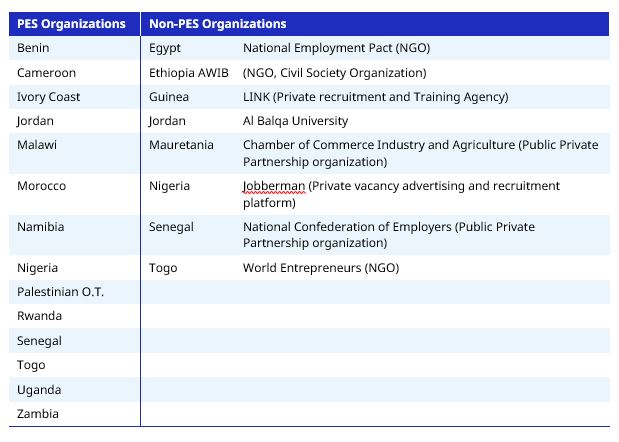
Annex 2. Key Themes from responses to Questionnaire
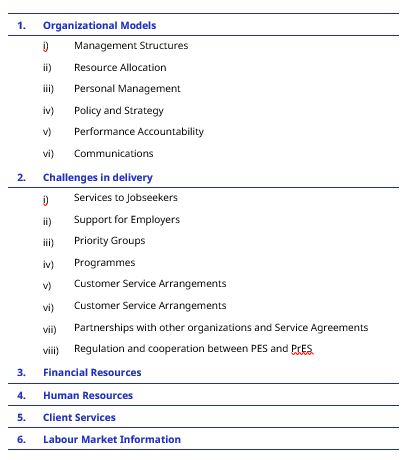
Annex 3. Institutional Setting of PES
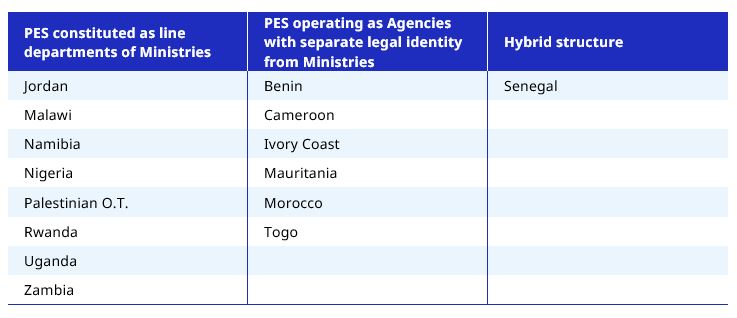
Annex 4. Suggested Case Studies for further investigation
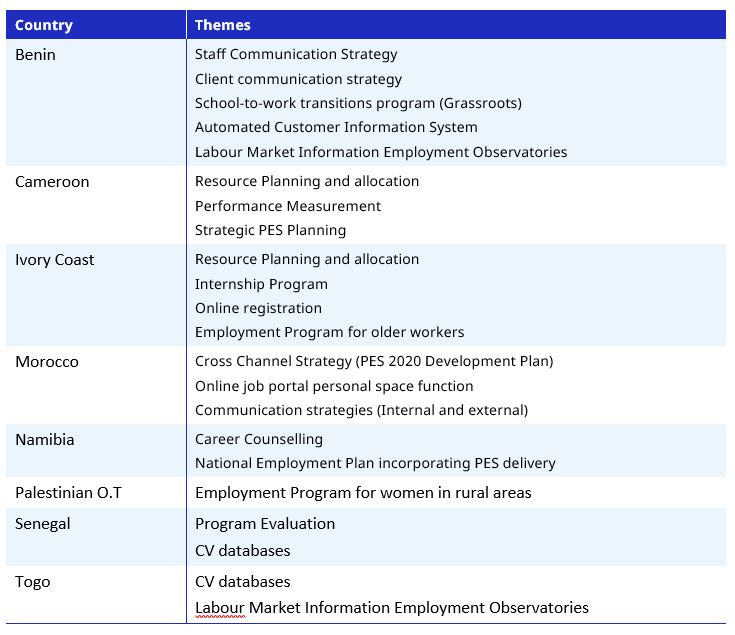
Annex 5 - Questionnaire
If organization is not a PES, please answer questions at Part B.
-
-
What is the legal framework for the operation of the PES?
-
Judicial autonomy
-
When was the PES established?
-
Is your PES?
-
-
-
An internal department within a Government Ministry (i.e. Labour Ministry)?
-
An Executive Agency under the direct control of a Government Ministry?
-
An autonomous public body?
-
Has the legal/institutional setting of the PES changed in the past, if so, what were the changes, and when did these happen?
Note: Executive Agencies carry out policies defined by the Government; autonomous public bodies can propose policies within guidelines set by Government.
-
-
Decentralisation and local decision making
-
-
-
Role of social partners
-
Do social partners have a supervisory role in your PES? - If so which partners, e.g. Employers Organisations, Trades Unions?
-
What role partners play in decision making? E.g. each partner having equal share. - Do partners have a role in the design, monitoring, and evaluation of labour market programmes?
-
-
Office structure – what is the number of
-
Regional offices?
-
District offices
-
Local offices
-
-
What administrative criteria are used to determine locations of regional district and local offices e.g.: Political Boundaries of regions/municipalities, population, labour market factors, other?
-
-
-
What decision-making autonomy do National, Regional, District, Local tiers have for the following?
-
Financial / Budget Management – which aspects
-
Staffing levels
-
Other issues?
-
-
How are staffing levels at national (central), regional, district and local offices decided?
-
What management tier is responsible for:
-
-
Recruitment
-
Job Design
-
-
-
What are your countries national economic and employment policy objectives?
-
How does the PES support these?
-
Is the emphasis of employment policy delivery on:
-
Active or Passive Labour Market Policies?
-
Universal provision or targeting?
-
A Work First or Human Capital Development approach?
-
-
-
-
What is your PES primary goals and objectives?
-
At what level (National/Regional/Local) are performance targets set?
-
What level are national targets disaggregated to?
-
Regional
-
District
-
Local
-
Team
-
Individual Staff member
-
-
Performance measures
-
How is performance supervised and evaluated? Is the impact of the PES measured, if so how?
-
What is the monitoring authority for PES performance : Ministry of Labour, PES, other (please specify?)
-
What performance measurement system is used in the PES?
-
How are the levels of performance indicators decided?
-
What is the relationship between national performance indicators, and indicators at region, district, local tiers?
-
What are the key performance indicators?
-
How is customer and employee satisfaction measured? What are the recent performance trends?
-
What criteria are used to compare the performance of offices, taking into account different levels of staff resource and varying local labour market situations?
-
Are PES services, including ALMPs, objectively evaluated, if so how, and which services have been found to be most effective?
-
Provide a summary of PES performance (number of people accessing specific PES services, share of labour market served by PES, client satisfaction rates, specific challenges?)
-
-
-
-
Does the PES have a communication strategy?
-
How are
-
-
-
Internal communications handled in the PES?
-
External communications handled in the PES?
-
-
What are the main challenges associated with your PES Organisational Model?
-
-
-
Providing labour market Information/advice and guidance (counselling, orientation, referral to training/active labour market programmes, job search assistance, placement/intermediation)
-
Individual support (skills assessment, profiling, individual action plans)
-
Group activities
-
Information seminars
-
Job Fairs
-
Job Clubs
-
Others?
-
-
Specialised support (e.g. Career Guidance for young/older -over 50 years jobseekers- counselling/vocational orientation)
-
Multi – channelling provision of services
-
Teams or advisors for special target groups (the Long Term Unemployed), the disabled, ex-prisoners, substance abusers, ethnic minorities, low skilled or unskilled jobseekers)
-
Case management, intensive support for jobseekers facing multiple issues/barriers
-
In-house training for jobseekers
-
Have there been major changes in service provision during the last twenty years, if so, what were these, and why were they introduced?
-
Is there an operational manual describing processes and procedures?
-
Is job matching IT based or manual?
-
Are ISCO and ISIC codes used for classifying jobseekers?
-
2.
-
-
Does your PES have an Employer Engagement Strategy? If so, are contacts with Employers organised by
-
Sector
-
Size of organisation
-
Number of vacancies provided for PES
-
Type of support required (i.e. support for staff in firms in pre-redundancy situation)
-
Need to train/retrain employees and/or employees willing to participate in ALMPs
-
Location
-
Other methods
-
-
What share of national vacancies are placed with the PES?
-
Are employers legally required to place vacancies with the PES?
-
For each of the last five years how many vacancies were advertised, mediated and filled?
-
-
-
-
Information, advice, guidance for recruitment (vacancy registration, vacancy and CV databases, preselection services etc)
-
Legal and financial counselling (information and guidance on access to subsidies, advice on contracts etc).
-
Support for human resources development or other (training for new/employees, placement information, subsidies for hiring persons belonging to vulnerable groups etc)
-
Other services
-
What is the profile of employers who work, place vacancies with the PES?
-
How are employers interviewed i.e. at PES offices, employers’ premises, by telephone, other methods? Is there an appointments system?
-
Are ISCO and ISIC codes used for classifying employers?
-
-
Does your organisation provide specific support for priority groups, if so, can you specify?
-
-
-
Younger/Older people
-
Women
-
Disabled people
-
Long-term unemployed
-
Migrants refugees
-
Other groups
-
-
-
-
Is your organisation responsible for delivery of :
-
Active Labour Market Programmes
-
Careers Advice
-
Vocational Training Programmes
-
Unemployment Benefits
-
Social Assistance/Welfare Benefit Payments
-
Other functions
-
-
Are these delivered
-
In-house?
-
By other organisations: public bodies /private bodies /NGOs?
-
-
What type of programmes does your PES provide?
-
Employment incentives for employers (e.g. subsidies)
-
Supported employment and rehabilitation
-
Direct job creation/public works
-
Start-up incentives/entrepreneurship
-
Workplace learning, work experience, traineeships
-
-
What is the legal framework for the operation of Private Employment Services (PrES) and Temporary Work Agencies (TWAs).
-
-
-
-
Young/Older people
-
Women
-
Long term unemployed
-
Disabled people
-
Migrants and refugees
-
Other groups?
-
-
-
-
Describe the customer journey (process/procedure) from registration to final placement. Have there been recent changes, if so why?
-
Is Profiling of jobseekers done? If so, what methods are used?
-
Are all services delivered through the PES or are other (public/private/NGO) organisations involved, if so how? Describe how the PES collaborates with other providers to deliver services?
-
If the PES delivers services with other delivery partners, describe the main reason for this?
-
Does the PES use different customer contact channels, i.e. face to face, telephone, email, SMS, social media, internet etc? For which groups and to provide which services are different channels used? What is the reason for the PES channel strategy? How effective would you describe this approach, and what is the basis of your assessment?
-
What were the total number of jobseekers registered with the PES, and proportion (%) of registered young, older (50 years plus), disabled, me/women, migrants/refuges, as of 30/9/2019, and for the previous 5 years?
-
-
-
Has the PES introduced digital technology into design and delivery of services? What major changes have been introduced following this?
-
Does the PES operate an electronic system for exchanging/advertising/managing vacancies? Is this linked to other public/private job boards/ vacancy exchange systems? If so, how does this work?
-
Does the PES have access to a labour market information system to support service delivery, if so, is this integrated into other PES systems, what services does this system provide?
-
Did the introduction and adoption of ICT change the PES delivery model?
-
Does the PES use the same systems as other related agencies? If not, does the PES share data with other agencies? If so, specify which ones?
-
Who is responsible for the construction and maintenance of the PES IT system/s, what were the development costs and annual running costs?
-
Does your PES have partnerships with other organisations – if so, specify which?
-
-
Regional and local governments
-
Training Institutions
-
Non-profit service providers
-
For profit service providers
-
Trades Unions
-
Education and Training Institutions?
-
Private Recruitment agencies
-
Temporary Work Agencies
-
Large employers and employers’ organisations
-
Private providers of skills training
-
Other National Governments
-
Others
-
How are your partnerships with other service providers managed?
-
-
Service level agreements
-
Commercial contracts
-
Operation of voucher schemes
-
Outcome contracts
-
Service fee contacts
-
Others?
-
-
-
Is the PES responsible for the regulation of PrES (as described by the ILO Private Employment Agencies Convention 1997 (No 181)? If so, how is this done, what is the legal framework? If not, which body is responsible for this function and how do they coordinate it with the PES ?
-
Does PES cooperate with PrES and non-profit service providers? If so how?
-
Which services are delivered through PrES and other providers, e.g. Temporary Work Agencies (TWAs)?
-
Are these services outsourced or jointly delivered?
-
Does the PES prescribe and specify outcomes and how they should be achieved, or is a “black box” approach used?
-
Have services delivered through other service providers been evaluated?
-
How many PrES and (TWAs) operate in the country?
-
-
-
What is the source of your PES funding, e.g. central government budgets/public funding, social security/insurance contributions, PES own revenues (please explain), other sources of finance (please describe)? Are different sources of funding used to finance specific types of labour market polices, if so please explain?
-
How are PES funding levels decided, what is the basis for allocating specific levels of funding?
-
What is your current 2019-2020 overall PES budget (excluding unemployment payments), and what was your expenditure for the previous five years, i.e. since 2014-2015?
-
What proportion of your current PES budget is spent on Operational Costs (with further breakdown if available), Active Labour Market Programmes (ALMPs), and Passive policies? What was your expenditure on these for the previous five years, i.e. since 2014-2015?
-
What is the current expenditure on different types/categories of ALMPs and what was spent on these for each of the previous five years?
-
What proportion of your current PES budget is spent on staff salaries? And what was your expenditure on staffing for the previous five years, i.e. since 2014-2015?
-
What decides the budget allocated at national, regional, district and local levels?
-
What factors have driven changes in funding and expenditure during the last five years?
-
-
-
What is the total number of staff (full time equivalents) currently employed in your PES, What was the number of staff for the previous five years, i.e. since 2014-2015?
-
What proportion of staff are on permanent and temporary contracts?
-
What proportion (%) of PES staff work at the national (central) office, regional, district, local, tiers?
-
What share of staff (%) work in direct contact with clients?
-
What proportion (%) of staff work solely with young people, older people, disabled people, Long Term Unemployed, employers?
-
How many employment counsellors are there in the PES?
-
What is the average caseload for front line staff /counsellors?
-
What ICT tools are available to assist front line staff/counsellors managing their caseloads?
-
What training/development is provided for staff?
-
How are PES staff selected?
-
Through national public employee recruitment schemes
-
PES competency-based selection process
-
Other methods please describe
-
Does the PES operate promotion systems, incentive schemes for staff? If so, describe these.
-
What are the educational/competency requirements for staff recruitment to the PES?
-
If your PES provides specific services for certain groups of clients?
-
-
How many staff are employed/dedicated to working with each group?
-
Age, young/older jobseekers
-
Long term unemployed
-
Disabled people
-
Relations with employers
-
People receiving unemployment benefits
-
Other groups?
-
-
-
-
Is there a labour force survey (LFS) in the country?
-
Are the results and basic labour market indicators (such as employment by sector and occupation, unemployment rate, labour force participation) available to PES staff and customers?
-
Is there a vacancy survey which asks businesses about their vacancies (quality and quantity) or survey on vacancies and labour turnover i.e. hires, exists, layoffs etc?
-
Are there other surveys which can help determine labour market trends?
-
Do employers ask PES for labour market information, if so, what type of questions?
-
Are there any regularly updated, administrative data sets available to PES staff concerning:
-
Number of students per educational level and orientation of the course/degree (vocational or regular education)
-
Number of beneficiaries of public employment programmes or public training programmes or entrepreneurship programmes supporting unemployed or other jobseekers
-
Number of foreign work permits issued each year and for which occupations
-
Beneficiaries of social protection
-
-
-
-
-
Please describe your organisation, see categories below, and briefly explain its overall remit and objectives?
-
An NGO
-
A training organisation
-
A Private Recruitment Agency (PrES)
-
A Temporary Work Agency (TWA)
-
Other body
-
-
What is your organisations relationship with the national government?
-
-
-
How is your organisation funded to deliver services for the Government?
-
What is the nature of the relationship with Government e.g. Contract, Service Level Agreement, other?
-
Which services are delivered?
-
Which organisation is the primary client e.g. Labour Ministry?
-
What are the targets and performance expectations?
-
What is the annual budget for delivering employment services?
-
How long is the current contract?
-
How many staff are employed delivering employment programmes?
-
-
How many outlets are services delivered from?
-
How many clients were served in each of the past five years?
-
What proportion of clients receive the main services provided?
-
How does the organisation classify clients?
-
What proportion of clients are in each group?
-
How are clients referred/selected for specific programmes?
-
Annex 6 – Management structure by country and PES governance model
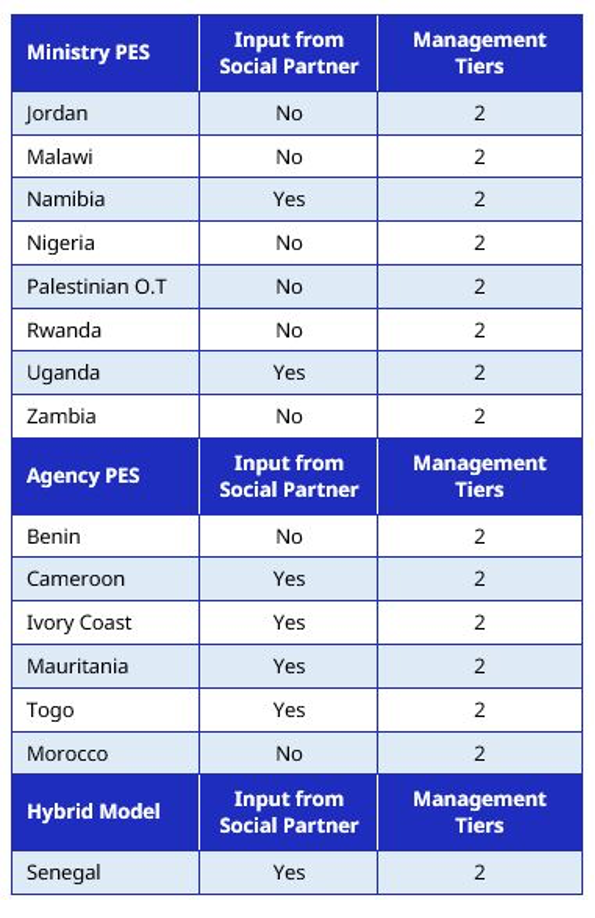
Annex 7 – Personnel Management by country and PES governance model

Annex 8 – Existing of a communication strategy by country and PES governance model

Annex 9 – Goals and objectives setting by country and PES governance model

Annex 10 – Group activities and Services offer to Jobseekers by country and PES governance model

Annex 11 – Priority groups targeted by country and PES governance model

Annex 12 – Services offer to employers by country and PES governance model

Annex 13 – Programmes repartition by country and PES governance model

Annex 14 – Customer service arrangements by country and PES governance model

Annex 15 – Use of IT by country and PES governance model

Annex 16 – Partnerships with other organizations by country and PES governance model

Annex 17 – Regulation and cooperation with private and non-profit service providers

Annex 18 – Staff/Client Ratio

Annex 19 – Use of Labour Market Information (LMI)

Annex 20 – GDP per capita by country
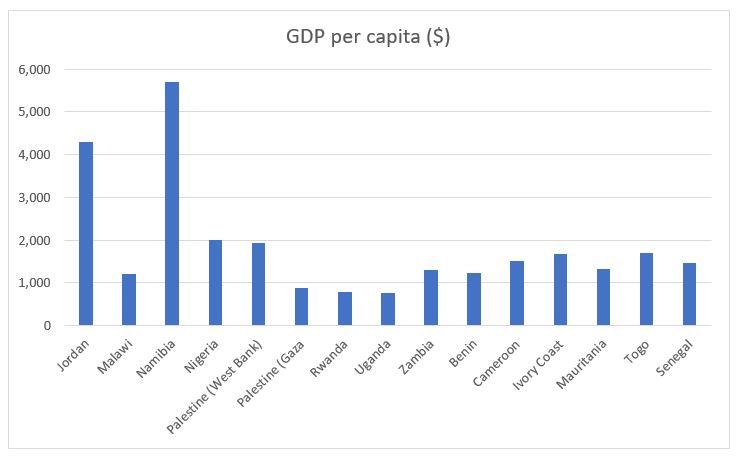
Annex 21 – Unemployment rate by country

Annex 22 – Labour Force

Annex 23 – Labour Force Participation

Annex 24 – Staff Client Ratio

References
OECD. 1997. Enhancing the Efficiency of Active Labour Market Policies; a Streamlined Public Employment Service, (OECD, Paris).
Thuy P., Hanson E. and Price D. 2001. The Employment Service in a changing Labour Market, (ILO, Geneva).
Walch K. 1995. Public Services and Market Mechanisms. Competition, Contracting, and the New Public Management, Palgrave Macmillan, (Basingstoke).
Hood C.C. 1991. A Public Management for all seasons? Public Administration, Vol. 69, No. 4, pp.3-19.
Clark J. and Newman J. 1997. The Managerial State. Sage Publications, (London).
Leroy F., Struyven L. 2014. Building Bridges, Shaping the Future of Public Employment Services towards 2020. Die Keure, (Belgium).
Mazza J. 2017. Labour Intermediation Services in Developing Economies: Adapting Employment Services for a Global Age. John Hopkins University. Palgrave Macmillan, (Washington D.C).
Angel-Urdinola D. et al. 2010. Public Employment Agencies in the Middle East and North African Region. World Bank, (Washington, D.C).
Marquez, G. and Ruis-Tagle, C. 2004. Search Methods and Outcomes in Developing Countries. IDB Working Paper No. 430.
Frey Dianne, F. and MacNaughton, G. 2016. A Human Rights Lesson, Full Employment and Decent Work in the 2030 Sustainable Development AGENDA. Journal of Workplace Rights, April-June 2016, pp. 1-13.
International Labour Organisation (ILO). 1999. Decent Work Report of the Director General ILO Conference 87th session, Geneva, Switzerland. Available: https://www.ilo.org/public/english/standards/relm/ilc/ilc87/rep-i.htm (13 Nov. 2020).
Garcia, A. and Nicodemo, C. 2013. Job Search, Wage Inequality and Neighborhood Channels in Developing Countries: The Colombian Case. IZA Discussion Paper No. 7336, (IZA, Bonn).
Mwasikakata, M. and Martins, P. 2017. Assessment of Public Employment Services in Namibia, Working Paper, (ILO, Geneva).
Contreras, D. et al. 2007. The Role of Social Networks in Employment Outcomes of Bolivian Women, Working Document Series, No. 251 July. (Chile University, Chile).
ILO. 2018. Women and men in the informal economy: A statistical picture, Third edition, (Geneva).
ILO. 2019. World Employment and Social Outlook, (Geneva).
World Economic Forum. 2018. Global Gender Gap Report, (Geneva).
World Bank. 2012. Gender Equality and Development, World Development Report. (Washington D.C)
OECD, IDB, WAPES. 2015. The World of Public Employment Services: Challenges, capacity and outlook for public employment services in the new world of work. OECD Publication, (Paris).
Diego, F. Angel – Urdinola, Kuddo A. and Semlali, A. 2013. Building Effective Employment Programmes for Unemployed Youth in the Middle East and North Africa. World Bank, (Washington D.C).
European Union. 2018. Report on Field Mission for seven selected Public Employment Centres in Ghana – EU GESP Programme. Available : https://www.aets-consultants.com/projects/health-and-safety/mid-term-evaluation-of-the-ghana-employment-and-social-protection-programmes-gesp (13 Nov. 2020).
Schulz, G. and Klemmer, B. 1998. Public Employment Services in English Speaking Africa: Proposals for Re-Organization. (ILO, Geneva).
Arends, F., Chabane, S. and Paterson, A. 2015. Investigating Employer Interaction with the Employment Services of South Africa, Labour Market intelligence Partnership Report, (Pretoria).
Hornsby, S. 2013. Online step-by-step guide for employers and work seekers, Employment Services of South Africa (ESSA) – Public Employment Services, Department of Labour. Available: www.careerhelp.org.za (13 Nov. 2020).
Govender, S. 2015. Presentation to Department of Labour Conference, 11 November 2015. Employment Services of South Africa (ESSA), (Pretoria).