


AI in human resource management
The limits of empiricism
Abstract
The rapid integration of artificial intelligence (AI) into Human Resource Management (HRM) is transforming how organizations recruit, manage, and evaluate their workforces. While proponents champion AI as a means to enhance efficiency, reduce bias, and align HR practices with strategic business goals, this paper argues that such optimism is misplaced. Drawing on a critical review of AI's application across four core HRM functions—recruitment, compensation, scheduling, and performance management—this paper identifies significant risks and limitations arising from the fundamental structure of AI systems.
Central to the analysis is a three-parameter framework for assessing AI tools: their objective, the data they rely upon, and how they are programmed. The paper shows that across HR functions, AI systems frequently operationalize reductive or poorly aligned objectives, rely on low-quality or biased data, and are programmed in non-transparent ways that undermine their usefulness. These structural shortcomings not only undermine the effectiveness of AI systems but also introduce legal, ethical, and practical risks for firms and their workers.
Keywords: artificial intelligence, human resource management, data analytics, algorithmic management
Introduction
Motivated by a desire to more efficiently and effectively manage people in organizations, HR managers are using the programming and analytical capacities of AI to fulfill key HR functions – including selection and recruitment of personnel, compensation determination and structure, performance review and evaluation, and the organization of working time. Largely absent from the rush to integrate AI, however, has been a comprehensive assessment of whether, and under what circumstances, AI is useful for the management of people within organizations. Yet despite the lack of assessment, the ‘AI for HR’ industry and the adoption of these tools and systems by individual firms and organizations is burgeoning.
This paper presents a framework for understanding and evaluating the potential benefits and possible risks or harms presented by AI systems in workforce management. Following a section of the paper documenting the historical context of the Human Resources field that has given rise, first to people analytics and then to AI, the paper presents a framework based on three inter-related parameters that can help assess the quality, legality, and suitability of AI systems used in the field. These are: (1) the system objective, (2) the data it is built on and relies on, and (3) how the AI system is programmed. Drawing on existing literature about how AI is being used for workforce management, the paper applies the three-parameter framework to map the contours of AI use relative to four key Human Resource Management functions where adoption of AI technologies has been prominent: recruitment, compensation, scheduling, and performance management. Our discussion section, “Unbridled optimism” views the disciplinary and occupational history of HR alongside the findings on HR’s emergent use of AI. We argue that the search for occupational legitimacy by HR professionals has fostered a preoccupation with numeracy and positivism that has provided fertile ground for the ‘evidence-based solutions’ that AI systems purport to offer. This tendency towards positivism, we contend, is likely to result in widespread adoption of AI under circumstances that create risks for workers, liabilities for firms, and costs for society. Given the seemingly inevitable transformation of work due to AI, we argue for the need for HR professionals to improve their understanding of the workings of AI systems so that they can better judge their potential and limitations, and that this is best achieved when they participate in the design of systems that are implemented in their workplaces.
How did we get here? The rise of “people analytics” and managing workers through data
Human Resource Management emerged in the 1950s as a distinct field of study and practice concerned with the management of people in organizations. Carved out from the broader discipline of Industrial Relations, which has historically examined labour relations in the context of unions and collective bargaining – or collective employment relations – Human Resource Management is most associated with an employer’s relations with individual employees
Since the 1980s, the dominant paradigm guiding HR managers has been ‘strategic HRM’
This epistemological shift has fueled the development of new metrics and datapoints that can be used to analyze the relationship between workforce management and firm performance. In turn, HR managers can use these new sources of data about the workforce to inform decision-making. This type of Evidence-Based Management technique (EBM) has been largely promoted in strategic HRM to help overcome pitfalls, such as relying on personal experience or managerial whims, or the tendency to mimic the strategies or approaches of top performers
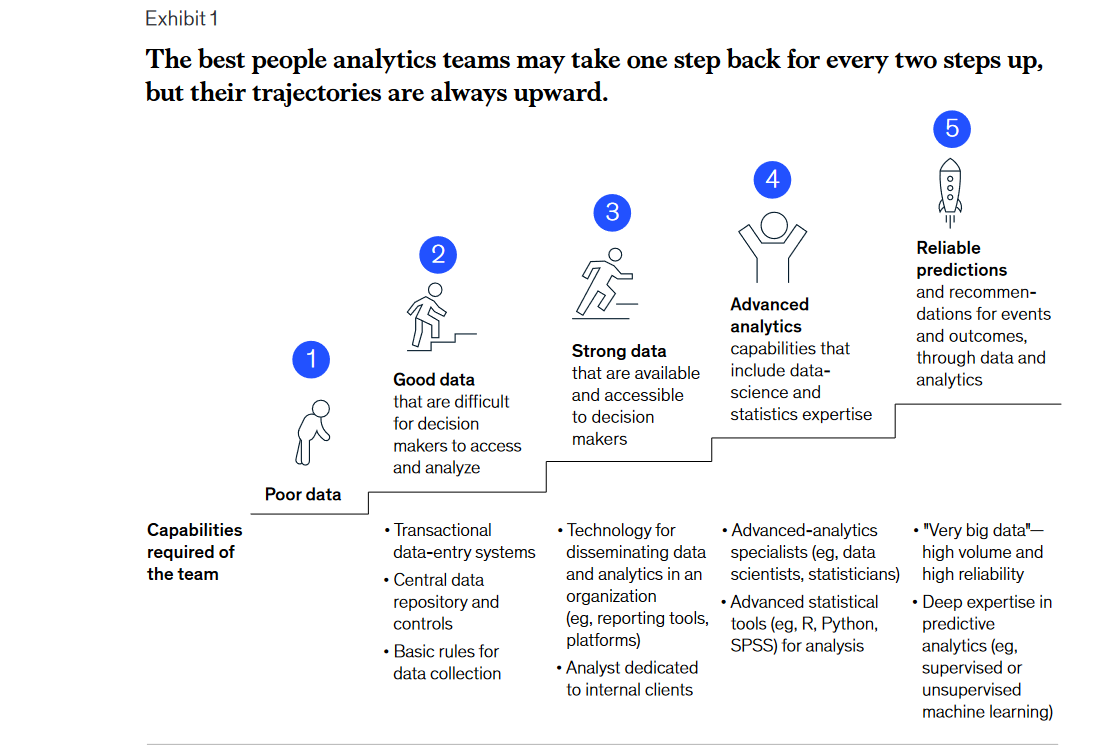
Within the field of people analytics and the development of AI, more data and better data are commonly viewed as precursors for robust and powerful systems. People analytics data may pertain to workers’ demographics, descriptive information about the location or nature of the job, performance, training or professional history, or tenure. While every organization has data on its workforce, advanced analysis for workforce optimization and planning can only be achieved when data are high quality, robust and plentiful, and when organizations have adequately trained staff to process and make sense of them. Figure 1 is an infographic from a McKinsey publication on the “virtue” of people analytics, stressing that the power of such systems to provide workforce insights increases with the volume and quality of workforce data
Figure 1. McKinsey infographic on the benefits of people analytics
Source:
When first introduced, HR professionals used people analytics to assess patterns about their workforce, informing a wide range of HR functions including recruitment and hiring, promotion, compensation, and health and safety
AI is distinguished by vast quantities of data and rapid quantitative analysis. These new sources of data have held particular appeal to a profession that has oriented itself towards EBM. Additionally, AI is popularly portrayed as innovative and cutting edge, and the use of AI technologies and tools is thus seen as a way to elevate the HR profession. This motivation is also underpinned by important context as historically many have tended to regard HR professionals as administrative functionaries, who – lacking power – are engaged in mere bureaucratic service delivery without adding any real value to the organization
Although the strategic focus of HRM in the 1980s (along with other activities such as the formation of professional associations and educational and training courses) provided one avenue for the occupation to recast itself on equal footing with other managerial professions
This approach, however, has not been without criticism. Scholars argue that while empirical research linking HR practices to organizational performance can at times demonstrate a clear association, the relationship between these variables is under-theorized
Proponents of AI integration, including many global consulting firms, promise exactly this: added value from the use of their newly developed technologies and tools – and specifically, that the predictive capacity of AI will help to reveal the recipe for an effective allocation of human resources. Companies are rapidly obliging. ISG, an organizational change management company, found in 2023 that one out of every three organizations was prioritizing AI and analytics in their HR and technology strategy. This finding was based on a survey of enterprise leaders at firms employing between 5,000 and 50,000 workers. As the report explained, “leading HR technology providers, such as such as Oracle, [IBM], SAP SuccessFactors and Workday, are focused on embedding AI, machine learning and analytics in the core platform”
Yet despite high rates of technological integration, including AI, the same ISG survey found that less than half of organizations surveyed realized business value from their investments. What has emerged is thus a paradox: although troves of data and developments in the field of AI promise to provide HR professionals with the necessary data and analysis to help them effectively and efficiently allocate human resources, these technologies have not yet delivered much value to firms and organizations. Why not? What does the actual evidence on the implementation of AI in HRM bear? Does the design of these AI systems allow them to deliver as promised?
The workings of AI systems: Objective, data and programming
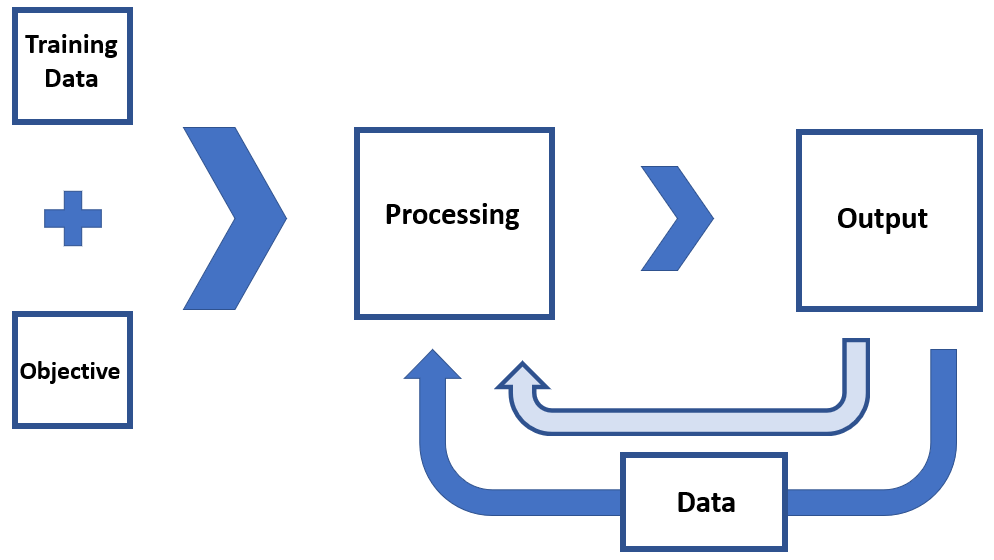
To assess how effective AI has been for realizing the overarching goals of HR, it is necessary to delineate what these goals are, and to unpack the workings of AI system to better understand potential pitfalls. AI systems are composed of three inter-related parameters: (1) the system objective, (2) the data it is built on and relies on, and (3) how it is programmed (See figure 2). The quality of each of these parameters differentiates systems that work well from those that do not.
Beginning with the system objective, while defining such an aim may appear straightforward, how these aims are operationalized is more complicated. When AI systems are developed with neutral aims – such as determining the shortest route between locations – it is easy to rely on identifiable and relevant variables and the findings are easy to interpret. But most human resource functions involve the “fleshy, messy, indeterminate stuff of everyday life” – stuff that are difficult to capture in a discrete variable
Data, meanwhile, are a necessary input to AI systems. Limitations in data have been the focus of much critique, with two particularly salient concerns. First, there is the question of data quality. AI systems rely on training data to ‘learn’ the connections and patterns that provide the foundation upon which decisions are made
Those cautious of AI have also pointed to the potential problems associated with the third parameter: programming. Algorithms are a key decision-making feature at the core of AI systems. They can be defined, in their most basic sense, as a set of rules executed through computer programming code with a particular aim or objective. Algorithms function with varied levels of autonomy and human involvement; these characteristics are also determined by their design and deployment
Figure 2. The workings of AI systems
Source: Authors’ elaboration.
For those who warn of the detrimental impact that AI could have in the world of work, how these three parameters of AI systems (objective, data, and programming) are chosen and deployed could jeopardize work quality and workplace fairness.
Moreover, the use of third parties’ ‘off-the-shelf’ systems can heighten risks. First, the algorithms embedded in AI systems may be poorly understood by firms and workers using them because of intellectual property concerns; and firms using externally developed systems may have limited ability to modify how the system functions to meet their specific needs. Second, deploying these types of technologies in contexts where real-life data differ from training data can lead to discrimination or poor outcomes. Third, concerns about workers’ data privacy have also emerged. While firms have long tracked a host of data about worker performance, the use of third-party systems often involves complex licensing arrangements that may include provisions that require workers’ data to be shared with the AI developer. Such sharing raises important questions about consent, privacy, and even the commodification of workers’ data
Within purpose-built systems, like those used in HR, the risks differ slightly according to the intended function. What follows is an analysis of contemporary uses of AI to help fulfil key HR functions, including recruitment, setting compensation, scheduling work, and performance management. Each of these discrete and purpose-built systems for HR functions is assessed in terms of the overall objective that is specified, as well as the data and programming involved.
Recruitment
Of all human resource functions, recruitment has been most transformed by digitalization, and more recently by AI. The shift to online recruitment began in the mid-1990s and was hailed by industry experts and economists as a revolution that would improve labour market matching by lowering the friction costs associated with job search and worker sourcing
The use of AI (or sometimes just algorithmic systems) in recruitment spans the different stages of the recruitment process, including sourcing of applications, but also their screening and eventual selection. In each of these stages, there are concerns around some or all three parameters of AI systems: objective, data and programming.
Sourcing
Sourcing refers to how candidates are recruited, including which platforms – job portals and social media sites – jobs are advertised on, and most importantly, who is shown the ad. Employers develop job advertisements and decide which third-party platform to use for distribution. The platform will then display the advertisement to the platform’s users depending on criteria set out by the employer and on how the algorithm is programmed. In general, AI systems are designed with the objective of specifically targeting individuals who are more likely to submit a job application after seeing the advertisement, or potential applicants with specific skills or traits desired by the hiring organization.
Each third-party platform that displays job advertisements has embedded AI systems that dictate to whom the advertisement is shown. The targeting of job advertisements to source candidates is complicated both by what data are available, what data are considered relevant to the objective, and how such data are processed. Platforms have a tremendous amount of data on their users, including demographic information about users’ age, sex, race, sexual orientation, religion, national origin, or political affiliation – the use of which can lead to explicit or implicit forms of discrimination.
The most blatant form of discrimination is when advertisements deliberately target or exclude potential applicants based on these characteristics. In 2002, Meta (Facebook) agreed to a settlement with the United States Department of Justice in which it would eliminate features in its advertising that allowed landlords, employers and credit agencies to discriminate against protected groups. The settlement followed revelations from investigative journalists that Facebook allowed housing marketers to exclude African Americans and others from seeing some of their advertisements
Discrimination can also be embedded in the programming code and how algorithmic optimizations are realized. In other words, an algorithm’s inferences about users’ preferences can also be statistically discriminatory. An experiment undertaken by researchers on Facebook examining how a STEM job was advertised found that although the ad was designed to be gender neutral, fewer women were shown the advertisement
In many jurisdictions and whether intended or not, actions that result in discriminatory outcomes are illegal. While steps have been taken to mitigate this risk, discrimination nonetheless persists. A 2020 audit of Facebook’s Ad Library API to ascertain ad distribution published after the Facebook settlement and changes to the advertising portal
Screening, Interviewing and Selection
The screening process typically begins with an algorithmic assessment of a candidate’s suitability. Some of the data – such as information provided on applicant CVs – is provided directly by the applicant. Other types of data – like screening tests, which can include a cognitive assessment, a personality test, or a video interview – may be collected by the algorithmic system as part of the application process. Still other sources of data – like an applicant’s credit history or social media activity, can be sourced from third parties.
The screening of CVs is done according to pre-defined criteria selected through pattern recognition and the analysis of prior datasets, in addition to criteria determined by the employer. Based on the organization’s needs, variables are created to capture the criteria and are then programmed into a software tool that is used to assess candidates’ profiles. Applicants are filtered accordingly. While the intent is to eliminate unsuitable candidates, potentially suitable candidates may be excluded if the pre-defined criteria are too narrow in scope or the data used to capture these criteria are poorly conceived or reductive. Ajuna (2023), for example, discusses the case of a firm seeking to hire an engineer. Although the firm would have considered any qualified engineer, the selection algorithm excluded the applicant because he had a Bachelor of Arts degree in engineering, as opposed to a Bachelor of Science degree in engineering, despite graduating from a prestigious university. While this is a low-level risk that can be easily fixed, it illustrates the problems of overly reductive programming and the need for human intervention in the design and implementation of AI systems.
The shift towards greater quantification of recruitment has also led to an expansion in the scope of the data collected and analysed about applicants. While background checks are common within traditional recruitment, employers now have access to an expanded pool of data detailing a worker’s background, including information from credit reports and social media activity
Once candidates move past the initial screening, they may then face other assessments, including cognitive, personality or situational judgement tests before being interviewed. Prospective hires are asked to engage directly with a digital system, with the assessments sometimes presented in a gamified format
In traditional employment assessments, there is some theoretical reason for associating certain traits with desired characteristics needed for the job, which can be defended if needed
The next stage in recruitment is typically the candidate interview. In AI-led video interviews, interviews are conducted and recorded by the digital system and potential candidates are asked a series of predefined questions by a bot instead of a human
To understand the reductive nature of some recruitment systems, consider the case of the Treasury Board of Canada, which in 2024 undertook a pilot study to use AI in its hiring practices. The Board presented the technology as a means to increase fairness, reduce bias, improve speed, and improve the candidate and job fit. As a public institution, the Treasury Board completed an Algorithmic Impact Assessment to identify possible risks from using the system. The company that they partnered with, a startup based in Toronto, Ontario, filed a patent on their algorithmic evaluation mechanism which consisted of two components: a behavioural assessment classification and a ranking algorithm. The patent documents provide significant insights into how the system functions.
The client had identified as its objective the selection of candidates with a “growth-mindset”. As a result, the AI system was programmed to identify and score candidates according to whether the vocabulary used in their initial CV and during the interview corresponded to persons with such characteristics. During a recorded interview, candidates were presented with targeted questions that had been developed to elicit answers featuring specific words identified as being associated with a growth mindset. Respondent answers were transcribed using voice-to-text software.
To analyze the transcribed interviews and generate a behavioural ranking, the system was programmed to look for the target words or phrases in the candidate’s response that matched the predetermined word list. When evaluating a candidate’s “growth-mindset”, the system would generate a sum behavior probability based on whether the words were used. More frequent use of words like ‘growth’, ‘development’, and ‘learning’ determined a greater “quantity” of the “growth-mindset” behaviour. The system allowed for calculating a quantity score of the behaviour at the level of the sentence, the question, or across the entire transcript – which is to say – for the candidate-as-a-whole. These results were then used as an input to inform decision-making in the hiring process.
The approach raises a fundamental concern – true of human-led interviews as well – about the supposition that responding with answers that suggests a “growth mindset” embodies the traits needed to be a successful employee. This fundamental weakness in recruitment has not been eliminated by using AI. Indeed, another case study of the experience of a large multinational in integrating AI into its recruitment practices highlighted “discrepancies between the envisioned machine learning (ML) approach and the complexity of knowledge work, such as the inability of the system to know what defines a good employee”
Compensation
Determining and implementing a workforce compensation system is a key human resource function. Organizations are challenged to develop and implement a compensation strategy that will attract and retain a high caliber workforce while meeting the organization’s goals
When establishing a compensation system, organizations are tasked with considering a wide range of pay features. This includes choosing a mechanism for structuring worker pay – such as adopting a salary or hourly pay system, or incentive-based systems such as those determined by commissions or performance. Depending on the country’s labour laws, employers may also need to assess what benefits will be included in compensation – such as pension or retirement provisions, paid time off, or healthcare. In addition to compensation structure, employers must also select how they will determine pay levels. This exercise often considers how jobs are valued internally – or relative to others within the organization; externally – within the market more generally; and individually – to reflect the skills and performance of an individual worker relative to others
That compensation is a target area is perhaps no surprise given that it accounts for such a large percentage of total economic costs
To date, companies that have promoted the use of AI for determining worker compensation have been those with access to large volumes of pay-related data. This has included large companies that generate significant amounts of compensation data internally, and – more frequently – software companies offering compensation services and third-party payroll providers who aggregate data across organizations
There are a growing number of AI-informed compensation software tools on the market that have been developed to complement the hiring process, for example, by forecasting salary projections of job candidates based on an evaluation of their resumes and skills
Providers of these types of AI programmes claim that benchmarked comparisons can help firms to determine internal wage grades and wage ranges that are consistent and competitive with market norms. While wage and compensation data are significantly more objective than variables aiming to capture more complicated phenomena like performance or predicted performance, issues with AI programming still arise in the field of compensation. In this case, “individual employers [must determine whether] their context is distinct enough that an algorithm built on data from elsewhere will make effective predictions in their own organization” (ibid). Put differently, if a software system recommends or issues an average compensation package for a group of workers based on an analysis of industry norms, this recommendation is only useful if the organization using the system and the workers for whom the compensation package has been developed are representative of industry norms.
The inferences and patterns drawn from large datasets can also be used to craft individual compensation packages. For example, HRbrain.ai, a company developing compensation software promises to “personalize incentive plans and bonuses using insights on what motivates each employee”
Among the most robust uses of AI for compensation has been in the gig economy, where large, on-demand firms have access to huge volumes of data that are structured on an individual basis and at a granular level. In managing and compensating a workforce comprised of individuals classified as independent contractors, several large firms have established performance-based variable pay under an employment regime that is beyond the purview of minimum wage laws in most jurisdictions
When using AI to determine compensation, the larger risks stem from programming. For companies, precisely tailoring wage rates to individual workers in real time according to worker preference and current market conditions can help firms to capture a greater profit share; yet such systems are also discussed as a type of ‘algorithmic wage discrimination’ (Dubal 2023). Profit-seeking firms are motivated to reduce costs where possible, and for lean and asset-poor gig economy firms, labour costs present the largest opportunity to do this. Unlike traditional compensation and minimum wage legislation that has sought to create a floor to provide all workers with economic security, algorithmic wage discrimination functions in reverse. The system begins by offering workers a range of job opportunities; then, over time, as workers accept or reject jobs based on a range of data points such as amount, length of time the job will require, and other individual considerations that reflect individual workers’ needs and preferences, the AI system learns who will work for what amount of money and under what conditions. The concept refers to algorithmic wage discrimination because once the AI system has identified workers willing to work for less, the system has been purported to limit the earning potential of that very group (Dubal 2023).
A key risk of personalized pay systems or using AI for compensation more broadly is that pay rates determined with the assistance of AI may run afoul of pay equity provisions. If flawed models and programming are used to establish pay rates and structures, for example, employers may be liable even if they did not develop the system
The opacity of AI system development and use for compensation is also a particular concern given that pay transparency has long been recognized as necessary for promoting pay equity
When it comes to AI, some developers claim that AI’s ability to identify compensation patterns and trends can help strengthen pay equity by identifying biases introduced by imperfect human-driven compensation systems. However, when AI used for compensation purposes lacks transparency and relies on proprietary data and code that are beyond the purview of oversight, the systems may have the opposite effect and undermine the recent progress that has been made in pay equity.
Scheduling work
Perhaps the oldest application of algorithms to HR functions has been related to the “science of ‘scheduling’”
Since CPA was first introduced various iterations of context-specific ‘scheduling problems’ have been examined. In each instance, the objective remains constant: to optimize the use of resources given a predetermined set of constraints that reflect both the nature of the ‘job’ and the conditions under which the job is performed
Since scheduling problems became a field of interest and inquiry, their mathematical precision has rendered computers and programming useful for finding solutions. Indeed, the 1959 paper that first re-envisioned project planning and introduced Critical Path Analysis was motivated by using computer-oriented systems to improve efficiency; the paper even mentions algorithms as part of the method for determining solutions to these types of problems
Early AI and algorithmic-scheduling systems are built on probabilistic models reflecting the constraints and goals of the system. Within manufacturing, AI scheduling has been used to reduce production costs, to optimize job completion times, or reduce the time required of HR or other administrative personnel to undertake the work of determining staff and production scheduling
Dynamic systems have also been successfully used across organizations. For example, during the height of the Covid-19 pandemic, the State of Massachusetts in the United States created an algorithm and job portal to re-allocate nursing staff in long-term elder care environments to facilities facing labour shortages. The algorithm considered the urgency, vacancies, and locations of nursing homes; the professional data, location, and availability of nursing workers; and criteria and matching policies that were set by the state. Overall, the use of the system not only helped match workers with jobs, but it also increased the staff to resident ratio and yielded a net increase in the hours worked per day. Those involved with the project noted that the success of this type of initiative, required “close collaboration of nursing homes, policymakers and the centralized matching process development team”
In addition to recommending changes to the total number of workers engaged at a given time by a particular organization or deploying workers across organizations, AI scheduling systems can also shift how labour is deployed within an organization by influencing how tasks are distributed between workers and how tasks are ordered. Achieving this type of dynamism requires granular data about the job process and extensive programming to accommodate a wide range of constraints. Data used in AI systems are now derived from an increased number of sources. These include ‘smart’ machines and tools that are deployed as part of the work process, and data from the workers. Workers may generate data by working with internet-connected devices or they may voluntarily contribute data in the form of their working time availability or scheduling preferences. In decentralized systems where scheduling inputs come from a range of actors, AI can help ensure that the organization is still able to meet its operational needs
When it comes to the deployment of labour within the organization, real-time tracking of job needs and progress allows organizations to assign workers to the most urgent tasks and to track their progress and completion. For example, real-time data gathered from airplanes is used to facilitate ground operations and to direct baggage handlers to their next task. The instantaneous data transmitted can update airport personnel in the event of a delayed departure or arrival, and the tasks allocated to airport workers can be updated accordingly
But systems can also be designed to support worker autonomy. For example, within the UK, BT Group, a provider of telecommunications services uses AI-powered task allocation systems to coordinate the work of field service agents – a fleet of often mobile worker technicians tasked with system repair and maintenance operations
Despite the benefits of building collaborative and transparent systems, there are also a growing array of more advanced and opaque systems used to distribute tasks based on a worker’s predicted performance. In call centres, for example, AI systems are used to create profiles of workers and clients using historical call data; then, by learning from past interactions between these actors and their success or failure, the AI system will match phone partners to achieve whatever the organization’s goal is (sales, assistance, etc.)
Beyond the concerns about the accuracy of predictive allocation – particularly when it is based on personality inferences – there are other significant and serious downsides to collecting the kinds of data these systems require. Many of the drawbacks of real-time tracking are related to the close connection that this type of monitoring has with performance management systems – discussed in the next section.
Performance management
Among the most extensively researched areas of AI at work has been the use of AI for performance management. Strongly tied to the legacy of Taylorism and the more general principle of scientific management
Within performance management, AI systems are often designed with the objective of improving efficiency and productivity – such as producing more goods or serving more customers with fewer resources. Such goals can be established at a firm level (such as generalized output of the workforce writ large), or, when information on the production process involves granular data about individual tasks, at an individual level
Some occupations and tasks lend well to objective measurement. Jobs that are highly standardized and repetitive are easier to quantify with data-driven performance management techniques. In occupations where workers’ decision-making opportunities are constrained, such as on factory floors in industrial manufacturing, worker performance can be measured by units of output. Facilitated by new technologies that quantify work
Among the best-known examples of the application of AI technologies are in the logistics sector. Workers at warehouse fulfillment centres in Italy
In highly controlled workplaces, the notion of measuring productivity as a function of output remains relatively unchanged from the productivity measures that have existed for decades (see, e.g.
While these systems may appear relatively objective regarding how output is measured, the designers of these AI systems make deliberate programming decisions that delineate between productive and non-productive activities. For example, in research conducted in slaughterhouses on assembly-line meat processors, workers were monitored using wearable devices and sensors capable of measuring activities like acceleration, orientation, and location and able to recognize human activities such as walking, standing, sitting, and sleeping. Workers’ activities were then identified according to pattern recognition and classified as either productive or non-productive, with the express goal of reducing downtime and increasing profits
New sources of data and efforts to develop more complex productivity and performance measures have also emerged. This has created opportunities for the quantification of work and data-driven management to spread into new fields. For example, research on the trucking industry has found that despite lower levels of routinization within this job (employees face new geographic locations daily), high levels of tracking and surveillance have now become industry standards. The data collected are vast and typically include “a driver’s fuel efficiency and idling time, speed, geolocation and geofencing (notifying a dispatcher if a truck has departed from a predetermined route or arrived at a terminal), lane departures and braking/acceleration patterns, cargo status (e.g., the temperature of a refrigerated trailer), and vehicle maintenance/diagnostic information”
Traditionally, occupations that require complex problem solving or are characterized by high levels of interpersonal interaction have not been seen as well-suited to the types of quantifiable performance metrics detailed above. However, recent developments in natural language processing technologies and facial recognition have pushed AI development towards “emotional recognition”. The data collected on interpersonal interactions are used to offer workers real-time feedback on how they are doing their jobs. Voice recognition used on call centre workers, for example, will ‘listen’ to phone calls and generate recommendations for workers regarding the call content and their emotional disposition
The growth of AI-driven performance indicators has exploded since the Covid-19 pandemic. With the shift to remote work, many knowledge workers whose work performance was previously not monitored or measured found themselves working from home. Unable to see the workforce, employers began to rely on a host of monitoring tools as a stopgap measure to assuage their concerns about shirking. The systems collect data on keystrokes, mouse movement, screen activity, email content and more
As a result, some of the performance metrics provided may be difficult to interpret both for managers and workers.
But even in traditional workplaces, where there is possibility for feedback from managers that can support professional development, managers might find that they are not able to guide staff based on the metrics collected, especially as the systems may lack transparency regarding the variables used and what data are collected and monitored. As such, the information is either of no use or worse, risks steering performance in an ineffective way and weakening the role of managers.
AI in HRM: Unbridled optimism
For HR to fully reckon with the opportunities and risks of AI, the field must reckon with an underlying positivist orientation and bias towards numeracy as emblematic of a superior way of knowing and understanding the world of work. These tendencies within the field have yielded an unbridled optimism about the benefits of AI that is largely devoid of an understanding of the three pillars that underpin these systems and their implications. A failure to reckon with the assumptions that have fueled HR’s embrace of this technology puts in peril the fundamental mission of HR of effectively hiring, retaining, motivating and managing workers to secure organizational success.
While some facets of the workplace are arguably more objective and well-suited to quantification – for example, the number of goods produced, or the number of hours that a worker is scheduled for – HR functions are incorporating AI and quantification for a range of other objectives that evaluate workers against complex constructs. When applied to performance management of knowledge workers or candidate predictions in recruitment and selection, human behaviour cannot be broken down in to discrete variables and evaluation of certain performance metrics does not guarantee success
Within positivism, numeracy is attractive because it invokes the idea that there are correct and incorrect answers, thereby advancing the notion that there is a unitary and replicable ‘best practice’ for any given task or challenge. Thus, HR’s positivist paradigm also predisposes the field to adopting AI 'solutions' that could introduce bias or could be situationally inappropriate. The notion of a universal truth, which is a tenet of this ontological orientation, may lead HR researchers to believe that the same AI system will work in all contexts. Yet research does not bear this out. When a system is developed for a specific objective, but deployed in different environments, AI systems sometimes generate different outcomes. This can be attributed to the training data that are fed into the system or to the variables that are considered by programmers.
As HR professionals work to minimize liability and risk, they will have to determine if AI use is appropriate and what AI system adaptations may be necessary. Specifically, they will need to ensure that any AI system put in place is based on a measurable and clearly defined objective, uses appropriate data, and is programmed to achieve its stated goal. While this sounds straightforward, in practice, it is full of problems, particularly in managing humans at work. This does not imply that there is no role for AI systems in HR management, but rather that there are important limitations that need to be understood and considered when managers embark on their AI journey.
The first challenge of defining the “objective” seems straightforward – selecting qualified candidates in recruitment, setting compensation at a fair price that reflects market conditions but also individual attributes, improving worker performance, to name a few. In practice, however, most of these objectives cannot be sufficiently well defined, or defined in a way can be distilled into data points and then programmed into algorithms. The challenge can be seen clearly in the case of recruitment (both screening and selecting the right candidate), which has always been a problematic task (i.e., selecting from a pool the individual who is most likely to be the best employee for the job). There is no doubt that AI can save tremendous amounts of time, and perhaps expense, in screening CVs or even interviewing candidates, but whether doing so achieves the objective of selecting the best candidate is less evident. Indeed, what the analysis has revealed is that while the second parameter of AI systems – data – has often been cited as the Achilles’ heel of recruitment, due to concerns over possible discrimination, it is instead the inability to operationalize the objective that is the principal concern and challenge.
Problems with objective are also seen in performance management. For some routine, standardized occupations, AI systems often have a clear objective, and the quantification of worker movements does provide a relatively accurate data source. Yet the performance targets may be set at such a high level that they imperil workers’ safety or well-being. For other types of work that are non-routine, the objective of “managing performance” cannot be met if only some aspects of the work can be quantified and monitored and the data being collected (screen time, email content) do not accurately capture performance. Moreover, performance management systems may not give the intended results or may generate results that are opaque and that do not provide useful feedback to staff (e.g., Rahman, 2021).
With respect to data, much criticism surrounds the representativeness of data. This problem can be solved, some contend, by incorporating more data into training the system from a wider cross section of the population. Yet while including more representative data is a valid endeavour, this ‘solution’ fails to examine whether the data are suitable for operationalizing the objective. As discussed above regarding AI in recruitment, one firm used a system whereby candidates participated in a game of blowing up a digital balloon as a data point in scoring candidates. One could incorporate more representative training data of people’s scores in this game, but that would still not address whether data from a digital balloon game constitutes a predictable indicator of performance, and thus whether candidates should be required to generate this data in the first place. In scheduling work and performance management, the only data that can be collected and used to train the system are data that leave a digital trace – not all the work that is performed.5 This is a problem for knowledge work, as online activity does not capture the breadth of tasks involved, but it is also true of many types of production work, particularly where there are unexpected situations that arise.
For programming, concerns center around how the algorithms, which are the key decision-making feature of AI systems, are defined and whether machine learning processes are opaque in ways that elude their users. In recruitment, the discriminatory risks of these systems are not just a concern for workers who may experience discrimination, but also the employers who deploy such systems. In these instances, firms may not only forego promising candidates during the recruitment process, but also might be exposing themselves to discrimination lawsuits as employers remain responsible for executing HR functions without bias
While these issues can emerge in any AI system, third-party software can exacerbate them. As AI and software firms compete to develop the most innovative and reliable software systems, their market advantage is often determined by their data sets and programming prowess. Third-party software developers thus maintain a high level of secrecy on how their programmes are trained and coded. While such secrecy helps to protect their interests in the AI product marketplace, it also means that users of these systems have a poor understanding of how they are designed and how they work.
What is an HR manager to do with AI?
An empirically driven evaluation of AI systems must originate with a different conceptualization of technology than the narrative that dominates investor and innovator circles. First and foremost, we should reconsider the presumption that AI systems and technology are always useful for the management of people at work. Or that AI systems are ‘easy to use’. These illusions fuel the high-speed adoption of AI in ways that generate risk for employers and workers alike. It is the responsibility of the HR professionals to determine whether, and under what conditions, the use of AI systems is appropriate, and – if AI systems are used – to integrate them into workplaces in a manner that minimizes risks.
Over the past thirty years, research on technology adoption has attempted to identify the conditions under which users adopt new technologies. Within this expansive literature, two features are viewed to be driving forces. These are first, the ease of use of a system – in other words whether the use of a system is free from effort –, and second, the perceived usefulness of a system, in other words, whether the user perceives the system to be useful to aid them in the performance of their job
Research based on the technology acceptance model and its later iterations has shown that we are more likely to adopt technologies when we perceive them to be useful for improving our job performance and when we find them easy to use. This framework has been used by software designers to promote the adoption of software; we should thus assume that the user experience of HR software has been developed with these considerations in mind.
When software engineers consider ease of use, they often focus on user experience and user interface. In many of the AI for HR applications, the technology systems and computer programmes operate with a high level of autonomy and automation that require little of those who deploy them. Indeed, research has found that although only a minority of HR professionals – including those employed in HR analyst roles – feel confident in their ability to conduct predictive HR analytics, many firms nonetheless adopt decisions driven by this type of analysis
It is precisely this lack of technological understanding that leads to the use of less-than-optimal systems. Overcoming this shortcoming requires that HR managers participate in the design, implementation and oversight of AI systems. Moreover, for HR functions that pertain to how work is conducted and evaluated (i.e., work scheduling and performance management), it is also necessary to involve the workers themselves. Involving all stakeholders in the design of AI systems provides a means to address all three pillars of AI systems: to clarify the objective, to ensure that the data used are suitable for that purpose and context as well as representative and transparent, and to ensure that the programing accounts for various conditions that the system is likely to encounter.
Having HR professionals meaningfully engage in the development process will lengthen the development and implementation time and it will also require that HR professionals develop more comprehensive and deeper understanding of AI. This investment is both necessary and worthwhile. A good example of such an engagement was that of the large multinational discussed earlier that spent two years and numerous iterations developing an AI-driven recruitment system, and in the end, adopted a hybrid system (van den Broeck et al., 2022). The company made the necessary investments in time and resources, and fully involved its HR professionals into the process of developing a recruitment software that could provide useful and explainable results. This kind of consultation was key to achieving buy-in from users and cultivating trust in the workplace.
The experience of BT, the UK telecommunications company with respect to work scheduling, is similarly illustrative. The company involved its field technicians in designing a system that combined the benefits of machine learning (knowledge from field technicians’ past assignments) while enabling the users, in this case the field technicians, control in organizing their work. The system led to a 10 percent improvement in productivity and improved the wellbeing of the engineers, with mental health absence reduced by over one-third
Both of these examples illustrate the importance of moving beyond the superficial “ease of use” advocated by the technology acceptance model to a participatory, multi-stakeholder process to design and build AI systems in which the users, including HR professionals understand not only how the systems work, but how best to use them.
Conclusion
According to UN Trade and Development, investments in artificial intelligence are expected to expand twenty-five-fold from 189 billion US dollars in 2023 to 4.8 trillion US dollars by 2033 (UNCTAD, 2025). Human resource management is not immune to this surge in investment. Building on the push towards greater empiricism and new sources of real-time data at the workplace, the incorporation of AI into the different core functions of human resource management has been posited as a natural next step following “people analytics”. Indeed, the field is particularly susceptible to the drive to incorporate AI as it has long sought to improve its standing within the executive suite, favouring empiricism whenever possible. Advocates contend that the predictive capacity of AI is an important advance in HR’s ability to realize its mission of improving and proving the effective allocation of human resources.
But there are limits to how well AI can manage the messy business of managing people at work. Across the myriad of HR functions examined – recruitment, setting compensation, scheduling work and managing performance – there are problems in defining objective, in the data used to train the systems and how it is programmed. These problems are particularly salient when workplace tasks require high levels of human interaction, when work is unpredictable, or when it can be influenced by many variables, or concerns complex human performance and tasks.
Like many areas of the world of work, AI is and will continue to impact HR management. But if these systems are to be useful and achieve the overall goal of effectively managing people within organisations, HR managers must understand how the AI systems work before implementing them. This requisite understanding is particularly difficult when off-the-shelf technologies are used, where the risks related to ill-defined objectives, unsuitable training data, and untransparent programming are likely to loom large; indeed, these off-the-shelf AI technologies may be ‘easy to use’, but they likely won’t deliver satisfactory results. The most effective systems will require the involvement of their users – in this case the HR managers and professionals, as well as workers. By participating in system design, and building and refining the systems, HR professionals can gain better clarity on whether the objectives they are pursuing can be achieved with an AI system, whether the training and real-time data are appropriate, and whether the programming allows meaningful results. As organizations around the world move forward with AI, we hope they will come to recognize the importance of a deliberate, human-centred approach to its use in HRM.
References
Acknowledgements
The authors would like to thank Anil Verma, Nikolai Rogovsky and Michael ‘Six’ Silberman for helpful comments and suggestions.